US
kills powerful Iranian general Ghassem Soleimani in Baghdad strike
The head of the
special forces of the Revolutionary Guards was in a convoy of the Popular
Mobilization, a coalition of Shiite militias accused of carrying out attacks
against the Americans.
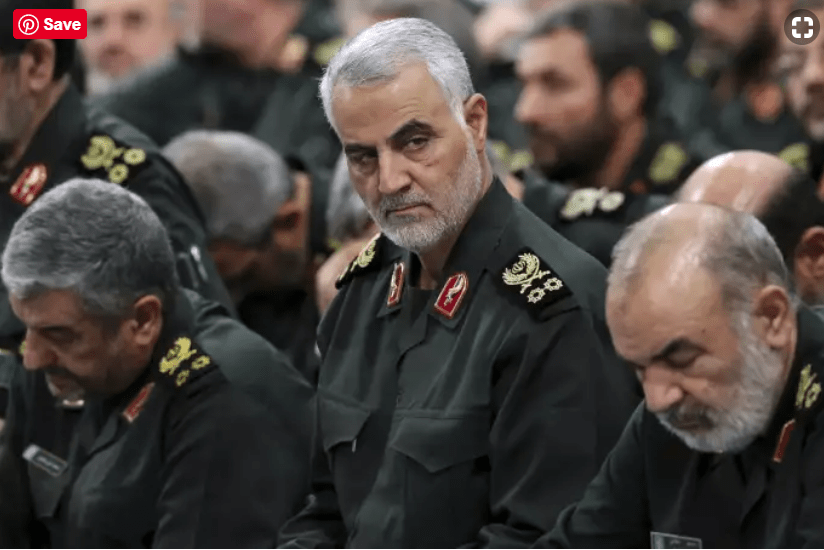
General Ghassem Soleimani in September 2016 in Tehran
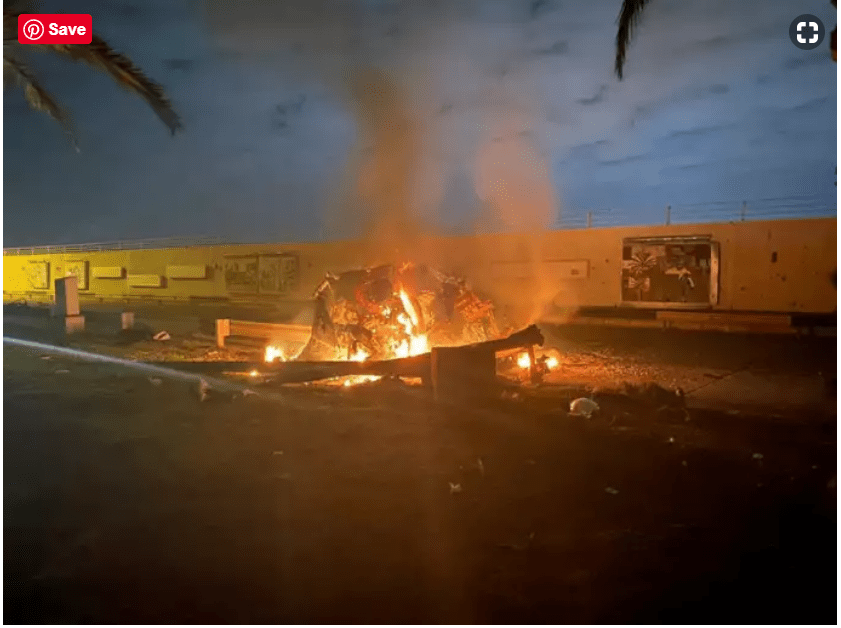
The drone fire that fell on the night of Thursday, January 2 to Friday, January 3, near the Baghdad international airport had a very specific target: vehicles circulating near the air cargo terminal. This convoy was made up of members of the Popular Mobilization (Hachd Al-Chaabi, MP), a coalition of Shiite militias now integrated into the Iraqi state, and several “guests”.
A spectacular
bombardment, which comes three days after an unprecedented attack on the
American embassy by pro-Iranian demonstrators, and while the Iraqi territory
seems to become over the days the scene of an episode of high tension between
the United States and Iran.
Among the five dead confirmed in this new attack, prominent figures in this geopolitical standoff. Starting with the powerful Iranian General Qasem Soleimani, a major figure in the Tehran regime, according to information from Iraqi state television confirmed by the Iranian Revolutionary Guards. Trained in the guards of the revolution, and become head of their elite unit, the Al-Quds forces.
In charge of the
Islamic Republic’s external operations, this charismatic figure has notably exercised
a key influence in political negotiations since 2018 with a view to forming a
government in Iraq. This 62-year-old man with a salt and pepper beard had
also become a real star in Iran in recent years and had very many followers on
his Instagram account.
Debris still on fire after the US attack on a convoy at Baghdad airport on January 3. Social Media / via REUTERS
Trump tweets an American flag
The militias of the MP, whose convoy was targeted, also announced the death of Abu Mahdi Al-Mohandes, their number two. This coalition of paramilitaries, in the process, accused the United States of being responsible for the bombing. A few hours later, President Donald Trump published on his Twitter account the simple image of an American flag, before the Pentagon indicates that he “killed” General Soleimani , at the request of the man who is also commander-in-chief armies.
“I appreciate the
courageous action of President Donald Trump against the Iranian aggression , “ quickly
greeted on social networks the influential Republican senator Lindsey Graham,
the president’s close ally.
“President Trump
has just thrown a stick of dynamite into a powder keg, and he owes the American
people an explanation,” said former vice president Joe Biden, vying for the
Democratic primary in preparation for the presidential election in
november. “Trump’s dangerous escalation brings us closer to
another disastrous war in the Middle East,” said Bernie Sanders,
another favorite in the Democratic primary.
For the President of
the House of Representatives, Democrat Nancy Pelosi, who spoke on Friday, it
is “a dangerous escalation in violence” :
“America – and the
world – cannot afford an escalation of tensions that reaches a point of no
return. “
Calls for revengeBy Iran
In Iran and Iraq,
calls for revenge are increasing. Iran and “free nations in
the region” will take revenge on the United States, President
Hassan Rohani promised in a statement posted on the government website:
“There is no
doubt that the great nation of Iran and the other free nations in the region
will take revenge on criminal America for this horrible murder. “
Earlier, the Iranian
foreign minister, Mohammad Javad Zarif, had denounced an “extremely
dangerous and reckless escalation” . “The United
States bears responsibility for all the consequences of its renegade
adventurism , “ added the diplomat.
On the Iraqi side, the
resigning Prime Minister, Adel Abdel Mahdi, estimated that the American raid
would “start a devastating war in Iraq” ,
denouncing “an aggression against Iraq, its state, its government
and its people”.
Qais Al-Khazali, a
commander of the Popular Mobilization, called on Friday “all the
combatants” to be “ready” , “because
what awaits us is a near conquest and a great victory,” he said.
he writes. He is the leader of Asaïb Ahl Al-Haq, one of the most important
factions of the MP.
Iraqi Shiite leader
Moqtada Sadr, on Friday, ordered his Mahdi Army fighters on Twitter to “stand
by” , reactivating a militia officially dissolved for about a
decade and which had sown the terror in the ranks of American soldiers in Iraq.
Three days of national mourning
The Iranian Supreme
Guide declared three days of national mourning. On his Twitter account in
Farsi, Ayatollah Ali Khamenei calls for revenge for the death of the general.
“Martyrdom is the
reward for his tireless work during all these years . God willing,
his work and his path will not stop there, and an implacable revenge awaits the
criminals who have filled their hands with his blood and that of other
martyrs. “
Iran summoned an
official from the Swiss embassy on Friday to represent US interests in Tehran
in the absence of diplomatic relations between the two countries. A
National Security Council will be convened urgently in Tehran to consider
Iran’s response to the attack, as calls for revenge have multiplied, such as
that of the former head of the Revolutionary Guards, Mohsen Rezai. “Soleimani
has joined our martyred brothers but our revenge on America will be
terrible,” he wrote on Twitter.
For their part, the anti-power demonstrators exult in Baghdad. Dozens of Iraqis who have been conspiring for more than three months in Baghdad and his Iranian godfather sing and dance on Friday morning in Tahrir Square in the Iraqi capital, chanting in particular: “Qasem Soleimani, divine victory has arrived. “
Major turning point
This new episode represents
in any case a major turning point for the whole region. Iraq, trapped
between its American and Iranian allies for years, has been the scene of an
escalation in recent weeks, which threatens to make the country a field of
confrontation interposed for the two powers acting on its soil. A dozen
rocket attacks have targeted American soldiers and diplomats since the end of
October, killing an American subcontractor a week ago.
On Sunday evening, Washington, which accuses Shiite factions of the Popular Mobilization of being behind these unclaimed attacks, responded by bombing bases of one of them near the Syrian border, leaving 25 dead. On Tuesday, a crowd of pro-Iranian fighters and supporters attacked the American embassy in Baghdad, an unprecedented episode of violence that ended on Wednesday with the withdrawal of these men from the ultra-secure green zone, where the embassy is located. , by order of the MP.
Read how the Iranian general has been killed what was the reason behinds? where it will lead to both Iran and America, will it start a new proxy war ? share your feedback and let us know was it a right decision to kill the General? TheCountriesOf.com
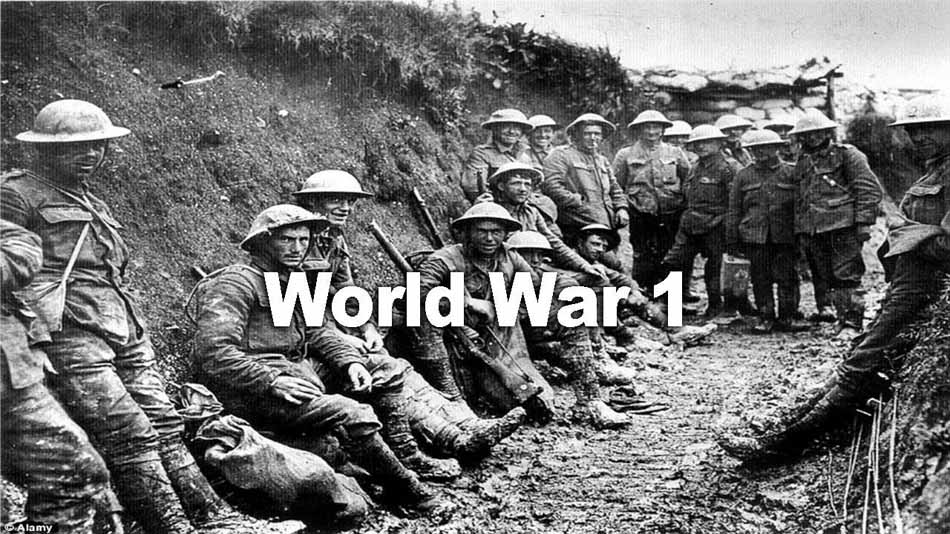
Mostly in this world people think that the war is not the batter solution for any kind of dispute, violence and misunderstanding. If we take a look on the history of this word when the war is being started, there were number of causes from which the brutality and the economic disasters were major causes that were going through the countries to countries. A number of the battles have been fought in the history of this world but the World War 1 is of the most hazardous wars that have been fought in this universe. In this historical war starting on 28th July, 1914 and ended on 11th November , 1918 many of the nations have fought and about 9 million soldiers and around 7 million civilians have died during this great and long lasting battle.
Major causes of the World War 1
The World War 1 isconsisted on the number of reasons such as hostility, discrimination and conflicts that lead the world to start this war and in this war imperialism, nationalism, alliance, and militarism also took the part to this great global War. The World War 1 triggered is directly press when Austrian archduke, Franz Ferdiand and his wife were killed. Following are the major causes which were directly involved to start this great battle.
Imperialism
It is the policy which is expanding the country’s power and acquiring new lands or countries by force. The main reason for acquiring the new lands or countries is the extension of their own markets. It was one of the major causes that started the World War 1.
Militarism
It is the situation when a country wants to maintain a strongest and most defending military strength. It was also the one of the major factors for starting this great battle around the globe because European and other nations stared arms race. The number of French and German soldiers doubled between 1870—1914 and there is very great competition in Britain and Germans. When British launch its battleship name “Dreadnought” in 1906 the Germans followed and introduced their own battle ship.
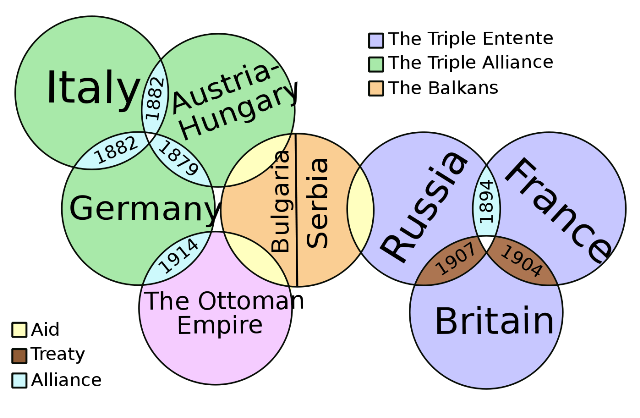
Alliance
It is a mutual agreement that is made between more than two nations to help in the time of difficulty or when other country needed the most. When more than two nations sign an agreement these are called allies. Before the world war1 many alliance are singed between 1879—1914 which is also a reasons for the World War 1. Following are the major alliances before the world war1.
Question of the Day
Do you know what countries were involved in the World War 1?
Ans :Although the World War 1 was fought between number of nations around the world which damaged the economy and lifestyle of the world yet there were some countries playing the greatest role in this great war. Following is the list of both the countries from the Victor side and the Opposition Side.
List of Countries from the Victor Side that fought in the world war 1
Serial
No.
Country
Capital
1.
France
Paris
2.
Montenegro
Podgorica
3.
United States
Washington, D.C.
4.
Russian Empire
Saint Petersburg , Moscow
5.
British Empire
London
6.
Italy
Rome
7.
Romania
Bucharest
8.
Japan
Tokyo
9.
Portugal
Lisbon
10.
Greece
Athens
11.
Serbia
Belgrade
12.
Belgium
City of Brussels
List of Countries from the Opposition Side that fought in the world war 1
Serial
No.
Country
Capital
1.
Ottoman Empire
Söğüt, Bursa,
Adrianople,Constantinople
2.
Austria-Hungary
Vienna, Budapest
3.
German Empire
Berlin
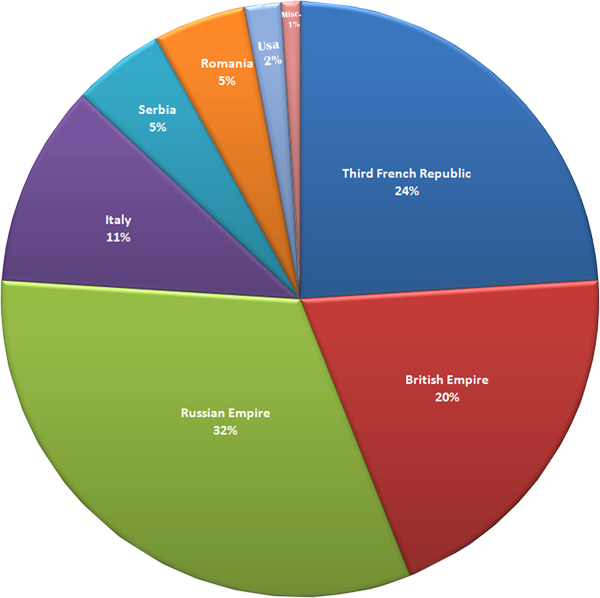
In this great and long lasting battle, different countries who taken part in this battle lost thousands of their soldiers and civilians who were fighting in this war. But the Russian Empire had the highest number of deaths during the WW1 . Following is a chart showing the military deaths of different countries.
Summery of the WW1 Military Deaths by Country in Percentage
TheCountriesOf.Com: Spreading the authentic information across the globe collecting from govt. sites of different countries and other very reliable resources. Hopefully now you are very aware of what countries were involved in the world war 1 ?
No matter if you are a new parent or have some experience in parenting, these challenges can be bothersome for everyone. Picky eating is one such challenge parents go through.
You worry about their nutrition but your child is refusing to eat food. What will you do? One of my friends went to the best pediatrician in Islamabad because my nephew stopped eating a lot of food. The doctor suggested some medicine which helped to improve the eating behavior of children. But alongside these medicines, some tips and tricks also helped her to overcome the problem.
Curious about what these are? Read below to find out about these.
How to Deal with Picky Eaters?
Getting picky eaters to eat something you prepared is not always easy, but there are a few tips that can help.
1- Avoid showing disgust or disinterest
Having a picky eater in the house is no fun, but there are things you can do.
The very first thing you need to do is to stop showing disgust towards them. Using the right tools and techniques will ensure a happy mealtime for you and your little one but make sure to not make them feel bad. This requires a lot of patience but also sets your first stepping stone to winning this battle of wills.
2- Eat first to show them
Children are most likely to copy you. Right? You can definitely use this technique to deal with their picky eating habits. Eat in front of them so they might find eating interesting food. Enjoy your food in front of them so they do the same.
3- Make food fun
By making food fun for picky eaters, you can overcome these challenges. Changing the appearance of foods is a great way to make food more appealing to your child. Here are some of the tips that work well here:
Cut sandwiches into fun shapes
Use bright-colored foods
If your child hates mushy or soft textures, serve crisp fruits or yogurt-based fruit smoothies instead
Use frozen foods as a snack
Use food face plates are great for your child to eat from
Focus on plates with coordinated forks and spoons, so your child will have a fun time eating.
4- Use the plate construction method
Another fun idea for your child’s tableware is the Construction Plate. It’s a great idea from Uncommon Goods. This idea is also great for younger children. This also helps you to add more and more variety of foods. More food choices mean that there are a lot of nutrient options your child can choose from.
Construct a plate of food containing both foods known and unknown to them. Segregate plates into different compartments and put different types of food into them that your child will find appealing and will try them.
5- Small portions increase your chances of a win
When you serve your child new food, try not to serve a large portion at once. This will only make the child feel as though they are being forced to eat. If you are able to keep portions small, your picky eater will be more likely to accept the food. If they still refuse the new food, try offering it a few times before giving up. This will give your child the chance to get used to the new food and learn how to eat it.
6- Don’t make eating a battle
Trying to deal with a picky eater can be a frustrating experience. There is no way to stop them from having a hard time eating, but there are ways to make the process easier. There are two main things to avoid when dealing with picky eaters: conflict and coercion. Conflict will only increase the emotional stress of mealtimes, and coercion will only make the situation worse. If you are able to avoid these two situations, your picky eater will be more likely to accept new foods.
7- Keep stress away while eating
Studies show that stress has a significant impact on the eating habits of children. So, try to reduce stress exposure while eating food. Don’t ask children about their grades or examples. One of the easiest ways to avoid conflict is to not put too much pressure on your child to eat. For example, do not expect them to clean their plate. Trying to force them to eat can lead to a battle of wills, which will only make the situation worse.
Bottom Line!
Getting your picky eater to eat can be a struggle. It’s stressful and sometimes painful. However, all of these tips can help you to deal with them. But be mindful that it requires a lot of patience and skill to deal with them. If you still experience trouble with eating behaviors, it is recommended to go to a child specialist.
For some unknown reason, what is forbidden tends to attract us. If they tell us that we cannot do something, with more effort we want to get it done. However, there are places on the planet that are restricted enough so that we cannot visit them, and it does not matter how hard or how hard we are. We discover ten of them:
Around the world, you will find unusual or wonderful places that you can obviously discover on the internet or just going there. But some places on our planet are difficult to access or not allowed to visit for the public. We will try to cover almost all 25 forbiddenplaces not allowed to visit.
They are so secret that most people do not even suspect anything of their existence: In the world there are some places that you will never see as a mortal. A selection of the top secret places of the planet.
Indeed, the places forbidden to the public or to the extremely regulated access are not lacking. Secret service headquarters, research laboratories, military zones, corporate headquarters in sensitive areas, high-level radioactive areas, etc. Many places are totally closed to the public and often come to feed the most wacky conspiracy theories. Here is a small list of 25 Forbidden Places in the World and mysterious places.
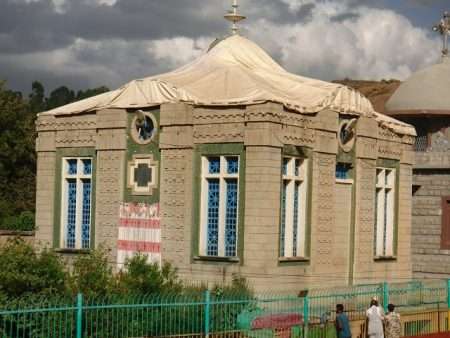
Chapel of the Ark of the Covenant at Aksum
Located in the city of Aksum, Ethiopia, the Chapel of the Ark of the Covenant is adjacent to the Church of St. Mary of Sion. This one claims to preserve the famous Ark of the Covenant which contains the tables of the law, given by God to Moses in the Old Testament. According to the tradition of the country, all Ethiopian kings are descendants of King Solomon and the Queen of Sheba. as well mysterious places that are not allowed to visit on this planet.
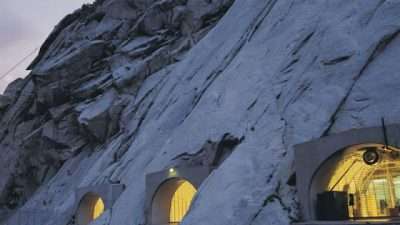
The Svalbard Global Seed Vault is the future of the world – in the form of millions of plant seeds. It also includes in 25 forbiddenplaces that are not allowed to visit.
The vault is located 120 meters inside a sandstone mountain on the island of Spitsbergen, in the remote arctic archipelago of Svalbard , 1,300 kilometers from the North Pole.
It is a facility with the most guarded and best guarded seed bank on earth.
Since February 2008, this crypt has protected the planet’s crops from a global catastrophe, keeping inside 250 million seeds from all over the world, wrapped in packages covered by four layers to protect them from moisture or equipment failure. of maintenance.
The reason for choosing this strange island is that it is not in a zone of tectonic activity, it preserves the ice of the land (the ground is frozen but not covered by snow or ice) and it is located 130 meters above sea level, which guarantees that the site will remain dry.
Unfortunately, you can only visit it if you are a researcher or farmer.
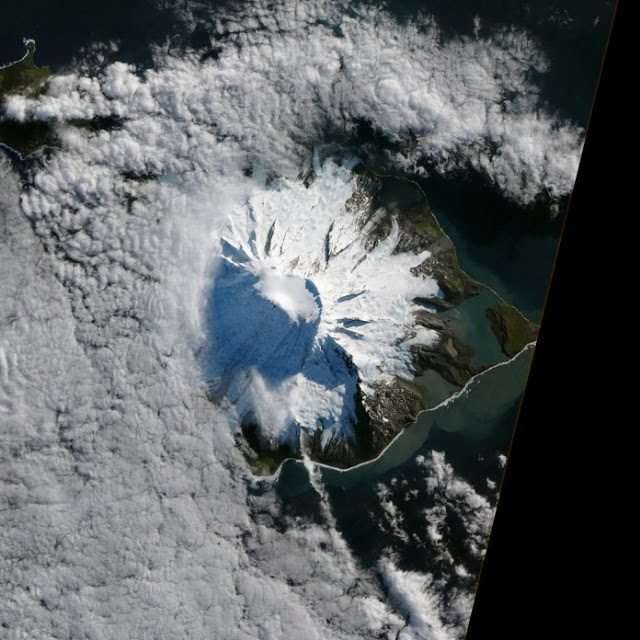
Heard and MacDonald Islands
It is a group of uninhabited islands, named after the expedition members who discovered them and landed on them in 1885.
They currently belong to Australia. The Heard is the largest and is home to the Mawson volcano which is 2,745 meters high and the second island is small and rocky.
Both are in the Indian Ocean, closer to Antarctica, so the climate is extremely cold and they are covered with snow most of the time.
In 1990, Unesco granted it the Title of World Heritage Site before the massive hunting of sea lions and birds that took place.
All expeditions made in the 20th century were for research purposes. To do this, a scientific base was built that is currently uninhabited.
The meteorological conditions and its location make tourism impossible. In addition, the subjects of scientific study on this island have been exhausted.
The islands are among the most remote places on Earth. They are located approximately 4,099 km southwest of Perth; 3,845 km southwest of Cape Leeuwin, Australia, 4,200 km southeast of South Africa, 3,830 km southeast of Madagascar, 1,630 km north of Antarctica, and 450 km southeast of the Kerguelen Islands; The islands are currently uninhabited. Source: WikiPedia
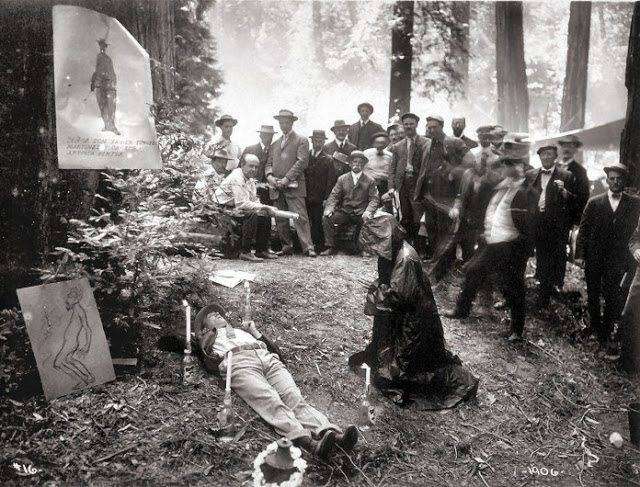
Bohemian Grove
In June and July some of the richest and most powerful men in America travel to the Sonoma County forest in California.
They are members of the Bohemian club . It is a private, all-male club, comprised of presidents of the United States, military officers, artists, and business leaders.
The grounds of the Bohemian Grove are littered with campsites with curious names, such as Mandalay, Lost Angels, Isle of Aves or Silverado Squatters. Guests are welcome, but women and minors must leave at nightfall.
There are numerous legends about the activities that take place but the official version says that it is nothing more than a meeting in which they enjoy nature and a series of cultural activities.
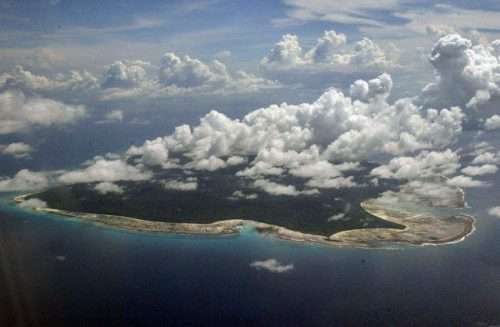
This island, located in the Bay of Bengal of the Indian Ocean and officially administered by the Indian government, is inhabited by a tribe of which little data is available. It is estimated that there are between 50 and 150 inhabitants left, the visit is illegal since any foreign virus could contaminate its inhabitants.
The Sentineles , as they are known, are one of the most primitive and endangered peoples on earth. What is known is that they migrated from Africa about 60,000 years ago and inhabit a small jungle area in the North Sentinel. They are one of the few hunter-gatherer tribes in the world and often use arrows and bows to defend themselves against foreigners.
After the 2014 tsunami, the Indian authorities approached the island to check the condition of its inhabitants and were greeted with arrows. From there, they established a strong control so that no one will come near this island.
Moreover, a helicopter came to check the state of the population after the 2004 tsunami quickly turned around since it was attacked by the Sentinels. The carcass was even pierced by the projectiles. Two fishermen whose boat drifted to their island were executed by the tribe in 2006.
Just recently, the Sentinelese tribe returned to the headlines: A young US tourist, who probably wanted to proselytize the tribe living in the Indian Ocean far away from civilization, was shot with arrows and died. His body will probably never be recovered, because the Indian authorities have forbidden it as entering to this island is not less than risking your life.
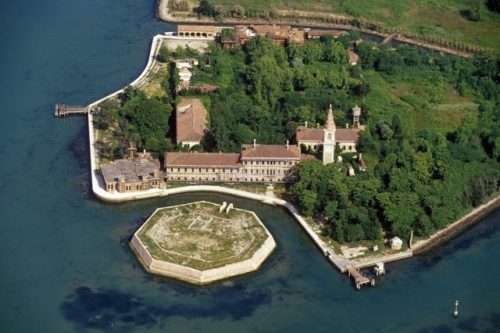
Located in Italy, between Venice and the Lido, it is popularly known as the “island of no return” or the “island of death” because of its past.
The legend has its origin in the Middle Ages, when it became a place of crematorium, cemetery and quarantine for plague patients.
To make up for the island’s bad reputation, the Italian government decided to install a psychiatric institution. Things did not improve, because one of the doctors experimented with the patients, so they decided to close the center and leave the island.
In 1960 it was bought by someone to establish a vineyard but it became uninhabited again.
In 2014 the Italian government decided to try to auction the island without success.
The Hawaii island of Ni’ihau has been completely closed to visitors since 1915.
It is the smallest uninhabited island in Hawaii. It may seem like an ideal place for a getaway with its palm trees, endangered fauna and the almost total absence of tourists.
But its 180 square km are forbidden to tourists. The island was sold by Kamehameha , King of Hawaii, in 1863, to the Robinson family, wealthy landowners. Since 1915 it has been closed to the public.
Life on the island is unusual: it has about 130 inhabitants, all of them are indigenous Hawaiians, they pay no rent, there are no paved roads, telephones or shops.
Although it is small, it has become famous for several incidents: in 1941 a Japanese pilot crashed after the attack on Pearl Harbor and in 1944 President Roosevelt considered it as a possible United Nations office .
Nowadays it is out of reach of the public unless someone invites you.
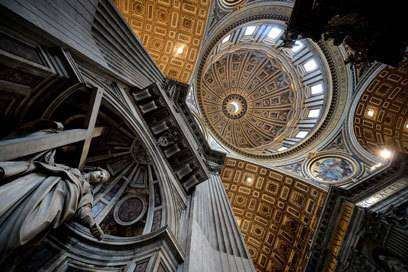
Thousands of book rarities and historical documents are stored in the Vatican Library.
The vaults of the Vatican Library contain invaluable documents that date back to the dawn of Christianity. The treasures include: the correspondence of the artist Michelangelo with the then popes, the papal appeal to the Fourth Crusade or the decree that ordered the excommunication of the reformer Martin Luther. In total, it should be about 35,000 volumes of books that fill a total of unbelievable 85 linear kilometers. Only those who submit a written request with personal information in advance and a letter of recommendation from a historical authority may have a chance to enter the Vatican Library. However, no one is allowed to enter without permission from the concerned authorities.
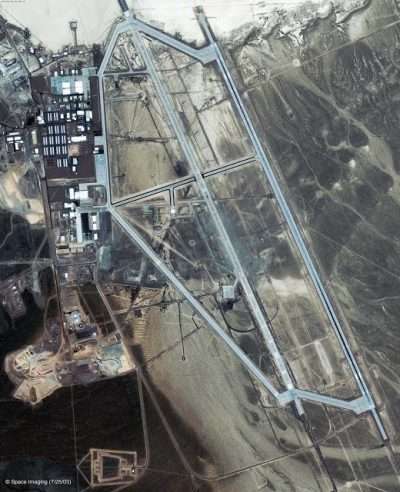
Surrounded by a paranormal mystique, it is forbidden to fly over the famous detachment of the US Air Force. The intense secrecy that marks the base led it to become an object of interest to lovers of ufology and conspiracy theories. It is the epicenter of the well-known Roswell incident, widespread in popular culture, which recounts the fall of an alleged alien spacecraft in the middle of the desert.
However, according to documents declassified in 2013, it would be an experimental test area for aircraft. The facilities are located in a southern region of Nevada, just over 130 kilometers from the city of Las Vegas. Area 51 is one of the 25 forbiddenplaces not allowed to visit.
Iron Mountain, Pennsylvania, USA
And another high-security bunker, but no seeds are kept in it, but data – and according to ” The Richest ” the most important data of some of the largest companies in the world. 22 stories deep in an old mine, for example, store data from Bill Gates, but also government agencies and music labels, who keep here the master tapes of their biggest stars. The place is named after the same name Iron Mountain, which operates such bunkers all over the world. There is also such a depot in Germany, in Hamburg. There, the data is stored behind a 750-kilogram steel door, which would survive even the attack with a bazooka.
Varosha in Cyprus has been a ghost town since 1974, where former residents recall their expulsion by the Turkish military.
Once this city was a tourist paradise, on the beach even actor legend Elizabeth Taylor sunned – until 1974 Turkish troops invaded the northern part of the island. More than 100 hotels and apartment houses, 21 banks, 24 theaters and cinemas as well as around 3000 smaller and larger shops counted the place in its best days. Today, it is widely cordoned off with barbed wire and guarded by soldiers with firing orders. The city is uninhabited until today.
The Federal Emergency Management Agency, a kind of civil protection agency, operates this secret facility. For years, media such as “NBC Washington” have reported that in the event of a nuclear war, the most important people could be evacuated and thus saved. The existence of the plant became known only in 1974, after holding a plane crash in the immediate vicinity of federal agents the media from the image coverage. Even in the nearby town of Berryville, most residents still do not know what’s going on in Mount Weather, according to the article. However, with the onset of a major natural disaster, Mount Weather could play a major role in rescuing major US personalities. I believe you are enjoying reading the 25 forbidden places to visit in the world.
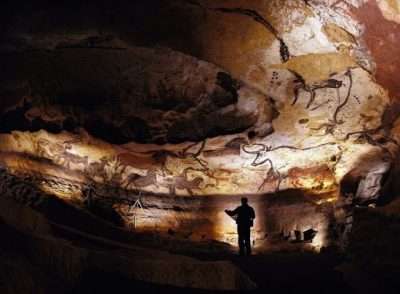
The Lascaux Cave was such a magnet for visitors until its closure in 1963 that it reopened in the 1980’s as a true-to-life replica (pictured here).
This treasure of human history was discovered in 1940 and contains some of the oldest cave paintings ever. As early as 1963, however, the cave was closed to visitors, as the images began to decompose daily due to the exhaled CO2 of up to 1500 visitors. Only just 200 meters from the entrance of the original cave but Lascaux II was opened, a detailed replication of the real cave, in which all murals are represented, and with interactive elements also be explained. If you want to find out more about the cave or visit their replica, you can find tips on the official website . It includes in one of the top mysterious places on this planet.
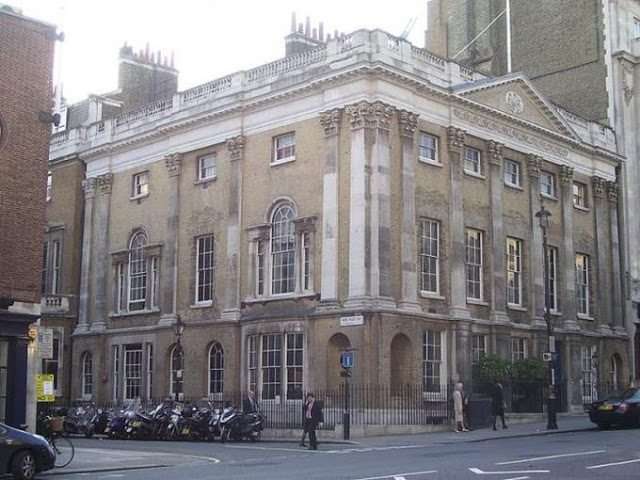
The gentleman club White’s
If you do not belong to the British high society, it is better not to try to enter it. This club, located in the heart of the London capital is indeed a place strictly reserved for English nobles such as Prince Charles or the Duke of Cambridge.
Founded in 1693 to sell hot chocolate, an extremely rare drink at the time, we do not know what is going on today or what this secret meeting place can serve. one of the top secret or forbidden place located in London.
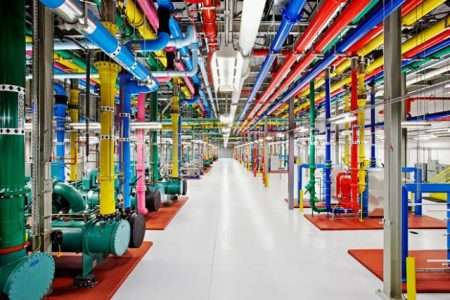
Located in Douglas, Georgia, it is one of the best kept places in the world and for good reason, Google’s most important data is hidden there!
Moscow Metro 2
Metro 2 in Moscow is so secret that nobody really knows if it exists. This is rumored to be a parallel (and secret) underground, used by Stalin and his KGB pals to visit various strategic places of power. The state has never denied the existence of this network. He has never confirmed it either, even if we imagine pretty well big guys mustache in thick overcoats and chapka counting their ration tickets by going to work at the headquarters of the KGB. keep reading the remaining secret places from the list of25 forbiddenplaces not allowed to visit .
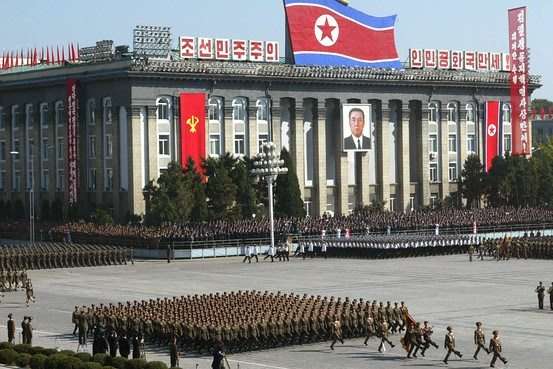
The secret organization of North Korea may also be referred to as Bureau 39 or Division 39. Many sources claim that Chamber 39 is a secret center in Pyongyang where the government promotes counterfeiting, production, drug trafficking and international insurance fraud. Room 39 of North Korea includes in the list of 25 forbiddenplaces not allowed to visit .
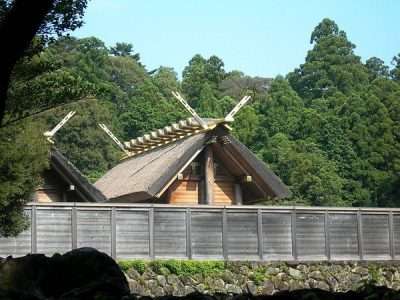
The Grand Sanctuary of Ise
In terms of Shintoism, there are no more sacred places. The trick is so sacred that no one can enter it except a priest (not necessarily mustachioed) who belongs to the imperial family, which considerably limits the number of postulates. To celebrate the cycle of life and death, the temple is destroyed and rebuilt every 20 years. The 62nd reconstruction will take place this year.
It is said that Pope John Paul II came out crying. “Hell” is the library of forbidden books in the Vatican Apostolic Library. Only popes can enter freely. Even the highest authorities of the Catholic hierarchy can not enter without the express authorization of the Sovereign Pontiff. Trial of Galileo, excommunication of Martin Luther, “confession” of the Knights Templar … Archives so far secret and kept under lock and key were opened for the first time in 2012 and had to be in hell before. It also contains the archives of the Inquisition, books of witchcraft and some ancient texts that probably represent more of a danger for the Church and dogma than for humanity.
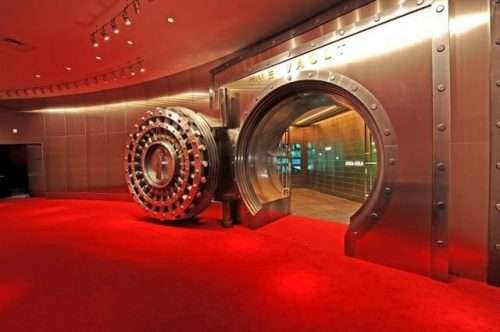
SunTrust Bank
The Coca Cola formula is one of the most sought-after trade secrets on the planet, housed in the Sun Trust Bank in downtown Atlanta, one of the best-kept banks in the world.
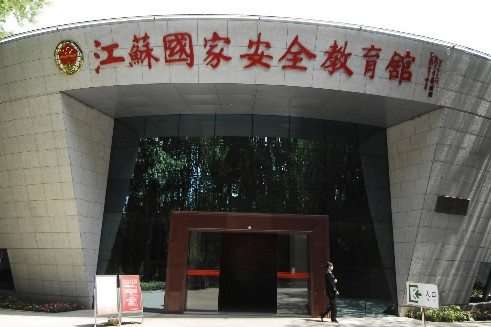
Museum of Espionage in Nanjing
This Chinese museum is entirely dedicated to espionage. t is indeed open to the public, foreigners have no right to enter. Located in east China’s Jiangsu Province, the Nanjing National Security Education Center is dedicated to Chinese Communist Party spies. It would include gadgets straight out of spy movies like pistols hidden in pens, cigarettes or flashlights. Not to mention the different listening tools. Museum of Espionage is one of the25 forbiddenplaces not allowed to visit.
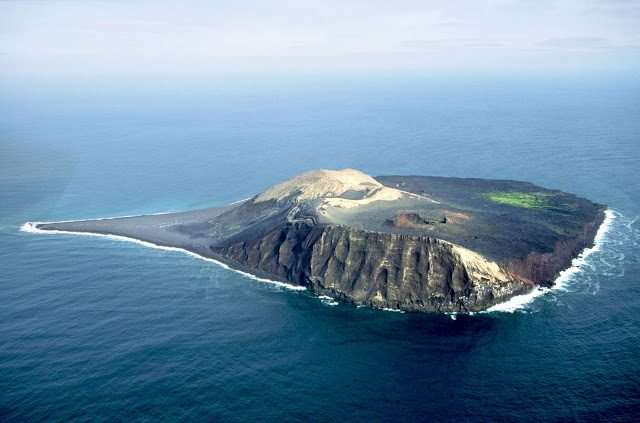
Located off Iceland, Surtsey is a volcanic island formed after a volcanic eruption began 130 meters under the ocean. The island has been the subject of all scientific attention since its appearance and, since the end of its eruption in 1965 (two years after its birth), is prohibited to the public. Only scientists are allowed to go there, to study the fauna and flora that appeared spontaneously on the island after its formation. It is to avoid “contaminating” the environment that the island is out of bounds.
thecountriesof.com, forbidden places to visit, surtsey secret places on earth
Granite Mountain
The Mormon Church has several archive safes dug into the Little Cottonwood Canyon in Utah. The chests would contain several million microfilms for information on genealogy and family history of church members. According to some sources, the number of microfilm rolls would increase by 40,000 each year. Although the place is not accessible to the public, the archives are available on the Internet and in its Family History Centers. The Granite Mountain is one of the .
Pine Gap
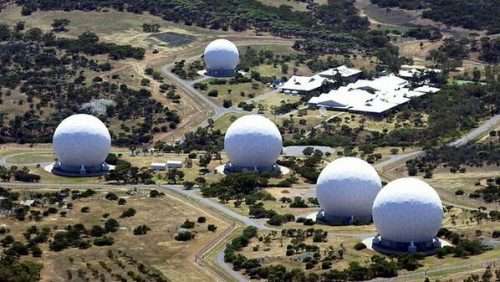
Pine Gap or Joint Defense Facility Pine Gap is an Australian “Zone 51” managed by Australians and Americans (CIA, NSA and NRO). This is a satellite tracking station, the unauthorized public has no right to access this place. The ECHELON project of international surveillance installed between different Anglo-Saxon countries.
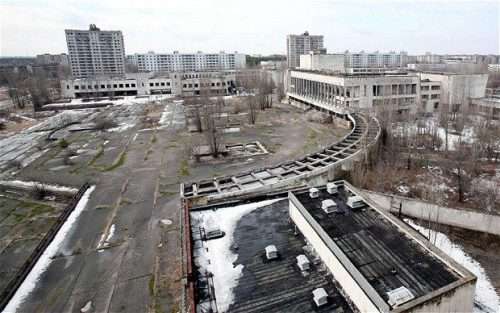
Located just two kilometers from the Chernobyl power plant in Ukraine, the city of Prypiat is a ghost town since the explosion of the reactor in April 1986. Due to the high radiation rate, it has been banned since that date. However, it can be visited rarely by some tourists. Like Fukushima, in Japan, whose reactor melted in March 2011.
We believe you love the selection of the top secret places of the planet that revealed in this article.
TheCountriesOf.Com: Spreading the authentic information across the globe collecting from govt. sites of different countries and other very reliable resources.
National Natural Sites of the United States (NNL) is a program that identifies and encourages the management, conservation, and rehabilitation of natural history in the United States. The program identifies geological and biological features in private and public property. The main objective of the program is to encourage and support individual and organizational efforts to preserve the sites that illustrate the country’s ecological and geological history. Below is the description related to The 5 National Natural Sites Of Arkansas.
The program also aims to encourage the public to appreciate the natural heritage. There are 599 national natural sites in the country, spread across the 48 states and the territories of the Virgin Islands, Puerto Rico, Guam and American Samoa. Delaware and Louisiana are the only states without a national natural landmark. The federal, state, county or municipal governments manage about half of the historic sites. One third belongs to private interests, the rest is owned and managed by a public-private company.
The Big Lake Wilderness Area is located in Mississippi County. It is part of the Big Lake National Wildlife Refuge. The landmark contains a large amount of virgin forest consisting of the southern flora of Ozark and the Midwest. The physical features of the area include a shallow lake, marsh, and lowland hardwood forest. He was appointed in 1974 and is responsible for the management of the US Fish and Wildlife Service.
Lake Winona Research Nature is located in Saline County. It consists of a large, short-leafed forest that once occupied much of Arkansas. The current reliefs develop during the Tertiary period which began 63 millions of years ago and continued in the Quaternary there are millions of years ago. Alum Fork Creek is the main source of water in the lake. It was designated National Natural Monument in 1976.
Mammoth Spring is a karst spring in Fulton County. It is the third largest in the Ozark Plateau region after Big Spring and Greer Spring. It is the seventh largest in the world. The source is a typical example of a source that comes from an underground stream. Spring provided water to a dam used to produce electricity at the beginning of European colonization. In 1925, Arkansas-Missouri Power Company purchased the dam and used it to produce hydroelectric power until 1972. The state-owned NNL was designated in 1972.
The natural search area of the roaring branch is located in Polk County. The reserve has a steep ravine with a mesophytic forest. The forest represents remnants of forest in Tennessee, Indiana and Kentucky. It also supports several species of plants. The NNL belonging to the federal government was designated in 1976.
The White River Sugarberry Nature Preserve is located in the White River National Wildlife Refuge in Desha County. It includes three lowland hardwood forests and a variety of wildlife populations typical of the forest type. It was designated National Natural Monument in 1974.
National Natural Monuments of Arkansas
Rank
first name
Dated
County
The possession
1
Big Lake Nature Area
1974
Mississippi
Federal
2
Winona Lake Natural Research Area
1976
salars
Federal
3
Mammoth Spring
1972
Fulton
State
4
Natural search area of the roaring branch
1976
Polk
Federal
5
Natural area of the White River Sugarberry
1974
Desha
Federal
I believe you love to read the post about The 5 National Natural Sites Of Arkansas and we love to know, if you share this article on any of the provided social media as an appreciation. Also spreading knowledge is like spreading the light to this world 🙂
TheCountriesOf.Com: Spreading the authentic information across the globe collecting from govt. sites of different countries and other very reliable resources.
The United States and United Kingdom governments are preventing passengers from putting in their carry-on luggage larger electronic devices than a smartphone or cell phone from certain destinations. The new ban applies to electronic devices whose width is greater than that of 3.7, that of 6.3 and that of 0.6. Among these devices are electronic readers, tablets, laptops, portable DVD players, cameras, travel printers, Kindles and electronic games larger than a smartphone. The ban represents some of the strictest travel restrictions to implement since 9/11.
Citing unspecified threats, US government officials who had been considering the ban for several weeks before revealing that the decision had been taken as a result of “evaluated information” regarding potential threats to airlines for states -United. The US government is concerned that terrorist groups have put in place new ways to develop bombs that are difficult to detect and hide in electronic devices. There are also concerns about explosive devices made from non-metallic materials, as most airports around the world do not have high-tech screening machines that can detect such bombs.
Who is affected?
The ban in the United Kingdom concerns six countries, while the US ban affects airports 10 in eight countries in the Middle East and North Africa. More specifically, the new ban affects passengers flying from Kuwait, Morocco, Saudi Arabia, Jordan, Qatar, Turkey, Egypt, Lebanon, Tunisia and the United Arab Emirates. In the United Kingdom, a total of 14 airlines is concerned, including British Airways, Monarch, Jet 2, Thompson, EasyJet and Thompson Cook. Other carriers include Egyptair, Royal Jordanian, Saudia Airlines, Pegasus Airways, Turkish Airlines, Middle East Airlines, Tunis Air and Atlas Global Airlines.
Airports affected by the US ban on consumer electronics include Dubai International in the United Arab Emirates, King Khalid International in Riyadh, Saudi Arabia, Hamid International in Doha, Qatar, Ataturk in Istanbul, Turkey, Abu Dhabi International in the UAE , Mohammed V International in Casablanca Morocco, King Abdulaziz International Airport in Saudi Arabia, Cairo International Airport in Egypt, Kuwait International Airport and Queen Alia International in Amman (Jordan).
Implications
Critics of the recently introduced ban argue that this will reduce passenger comfort, ultimately reducing the number of passengers traveling with the airlines involved. Most people who work on their laptops during the flight will not be able to benefit from this possibility, which is a major drawback. Problems such as stealing such devices remain a concern for many passengers. Many of the affected airports are among the busiest in the world.
Limits to the prohibition
The ban is aimed at maintaining security measures without making flight impossible, but there are some limitations. One of the issues raised was what makes it safer to store the devices in the cargo area of the aircraft while an attacker can use a phone to blow the device up. Passengers may also take connecting flights from other unaffected areas before boarding an aircraft bound for the United States or the United Kingdom, thereby complicating the logistics behind the ban.
Which countries are affected by the travel ban on electronics?
Rank
Postal code
City served
1
CAI
Cairo, Egypt
2
DXB
Dubai, United Arab Emirates
3
AUH
Abu Dhabi, United Arab Emirates
4
IS
Istanbul, Turkey
5
DOH
Doha, Qatar
6
MA
Amman, Jordan
7
KWI
Kuwait City, Kuwait
8
CASE
Casablanca, Morocco
9
JED
Jeddah, Saudi Arabia
10
RUH
Ryadh, Saudi Arabia
I believe youhave gain the knowledge of Which countries are affected by the travel ban on electronics? We love to know, if you share this article on any of the provided social media as an appreciation. Also spreading knowledge is like spreading the light to this world.
TheCountriesOf.Com: Spreading the authentic information across the globe collecting from govt. sites of different countries and few other reliable resources.
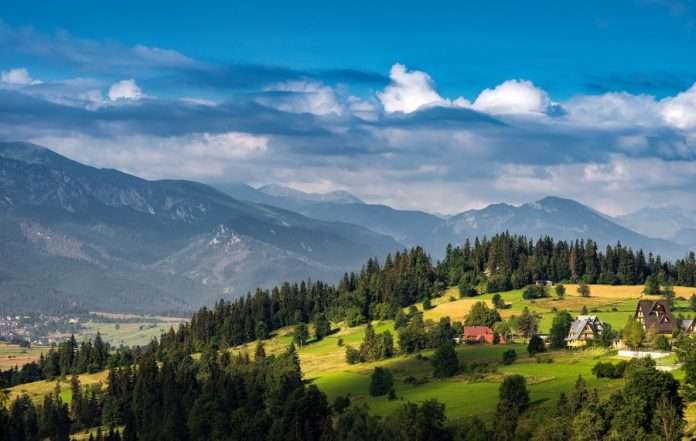
Poland is a country of Central Europe. The national capital of Poland is Warsaw, which is also the most important city financially and culturally, as well as the most populated. Polish is the dormant ethnic group which constitutes 94% of the total population. It is a parliamentary state with an executive president. The continental collision between Africa and Europe, which occurred millions of years ago, is at the origin of the country’s geological structure. Below I will list the top ten highest mountains in Poland and their height in feet.
Moreover, Poland has a diverse range of natural features, including more than seventy mountains with elevations higher than 60 feet. The Polish Tatra Mountain, located near the Slovakian border, is the highest mountain in the country. In this article, we look at some of the highest mountains in the country.
Mount Rysy is a granitic mountain that is part of the Polish mountains of Tatra, on the border between Poland and Slovakia. The mountain has three main peaks, with the south-east at 8,114 feet, the northwest at 8,199 feet and the average peak at 8,213 feet above sea level. The northwest is the highest peak in Poland while the other two peaks are on the Slovak side of the border. The name of Rysy is vaguely translated by stripes or crevices and is supposed to have emanated from the series of ravines on the slopes of the mountain.
The first documented ascent took place in the year 1840 by Ede Blasy and his guide Jan Ruman-Driecny. However, the first winter climb took place later in 1884 by Jacob Horvay and Theodor Wundt. Tourists and hikers visit the mountain in great numbers for climbing. The route by the Polish side is hard and steep, and many prefer to ride on the Slovak side. In 2007, Poland and Slovakia signed the Schengen Agreement which created a border crossing at the foot of the mountain.
The Mount Svinica is at an altitude of 7.549 feet as part of the Tatra ranges. It is also called Mount Swinica in Poland, which, translated, refers to a pig or pork. The name was used in the twelfth century and may have emanated from the peak’s appearance that resembles a pork silhouette. Another version indicates that the summit was named because it was hard to reach. Although the mountain is on the border between Poland and Slovakia, all marked trails are located on the Polish side.
On the Slovak side, there are few unmarked trails and only a few people use them. Climbing routes on the mountain are only allowed to those with club licenses. In summer, there are many crowds in the area because they offer the best temperatures for hiking. In addition to recreation, Mount Svinica is also used for training Polish mountaineers and rescuers from Tatrzańskie Ochotnicze Pogotowie Ratunkowe (Tatrzańskie Ochotnicze Pogotowie Ratunkowe).
Kozi Wierch is the highest peak of the High Tatras and the highest point which lies entirely on Polish territory at an altitude of 7,516 feet above the mean sea level. The shepherds called the mountain because of numerous herds of mountain goats’, once found in the area. The first documented ascent was carried out in 1867 by Eugeniusz Janota and his guide Maciej Sieczka, while the first winter climb took place in 1907 by Jozef Borkowski and Mariusz Zaruki on skis.
It is likely that some Highlanders, including shepherds and hunters, may have climbed the mountain earlier, but no documentation is available for this purpose. The mountain is popular with tourists, mountaineers and alpine skiers, offering all kinds of attractions for lovers of high mountains. The North Face 600, the vertical granite foot of the mountain, is a real challenge for experienced climbers.
The mountain known as Mieguszowiecki Szcyzt Wielki has an altitude of 7,999 feet above sea level and is also part of the Tatra Mountains. The first ascent took place in 1877. The winds from the top of the mountain make it difficult for hikers to climb. Temperatures drop to -40 degrees Celsius, the maximum recorded snow cover thickness being 161 inches. In the twelfth century, logging spread in the mountains to make way for humans. Although it is forbidden, the effects are still felt.
Territorial disputes in the Tatra Mountains
Most of Poland’s largest mountains are part of the High Tatras mountain range that lies along the Polish-Slovakian border. The ownership of the mountain range was controversial and at one point it was occupied by the Austrian army, in 1867. Hungary claimed part of the chain and the mountains became the border between the mountains. two countries. Many disputes have been referred to an international tribunal that has determined the exact curse of the border, ensuring that Slovakia, Hungary, Austria and Poland each get a share of the mountain range.
Top ten highest mountains in Poland
Rank
The highest mountains in Poland
Elevation
1
Rysy
Feet 8,212
2
Mięguszowiecki Szczyt Wielki
Feet 7,999
3
Svinica
Feet 7,549
4
Kozi Wierch
Feet 7,516
5
Miedziane
Feet 7,326
6
Klin
Feet 7,139
7
Kresanica
Feet 6,962
8
Smreczynski Wierch
Feet 6,785
9
Volovec
Feet 6,768
10
Tomanowy Wierch Polski
Feet 6,486
I believe you love to read the post about Top Ten Highest Mountains in Poland and we love to know, if you share this article on any of the provided social media as an appreciation. Also spreading knowledge is like spreading the light to this world. 🙂
TheCountriesOf.Com: Spreading the authentic information across the globe collecting from govt. sites of different countries and other very reliable resources.
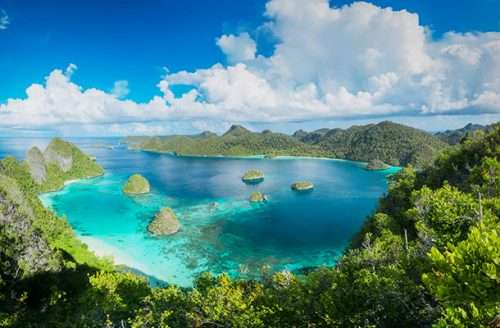
New Guinea is an island in the Malay Archipelago and covers an area of 303,381 square miles. The island, located in the southwestern Pacific, is the second largest island in the world and the largest in the southern hemisphere. With human occupation dating back to the 1940’s, New Guinea has a great cultural and linguistic diversity. About 1,000 Languages, classified in Austronesian and Papuan, are spoken on the island. Various European political groups have occupied the island since the 12th century, including Spanish, Portuguese, German, Dutch and British. Australia also occupied the island after the First World War. Currently, New Guinea is shared by two nations: Indonesia and Papua New Guinea. I believe you got the answer of the question, Where is New Guinea?
The western half of New Guinea includes provinces belonging to Indonesia. Western New Guinea first existed as a territory of the Netherlands and later as a territory of the United Nations. Indonesia took control of the territory in 1963, following its efforts to eliminate the influence of the Dutch powers. The Indonesian president organized a council of elders who was pushed to vote for the union of western New Guinea with Indonesia. Papua and West Papua are the two provinces of Western New Guinea. Cities in the region include Manokwari and Jayapura. The area covers an area of 162,371 square miles and has a population of about 3.5 million people belonging to indigenous and immigrant groups.
The indigenous tribes of the region include the Dani, Manikom, Hatam, Asmat, Marind, Biak, Bauzi and Sawi. Other groups include Indonesians, Austro-Asians, Malays and Malagasy. Western New Guineans fought for several years against the Indonesian government of the territory, saying they had no choice in the 1963 Act of Free Choice. This claim led to several conflicts between Western New Guineans and the government and led to rebellions. Western New Guineans have reported cases of human rights violations by the Indonesian government.
Papua New Guinea
The eastern half of New Guinea belongs to the nation of Papua New Guinea and forms the mainland of the country. The eastern half of the island was formerly occupied by the Germans, then by the Australians after the Second World War. Papua New Guinea gained independence from Australia in 1975. Papua New Guinea functions as a representative parliamentary democracy, with Queen Elizabeth II as head of state.
Papua New Guinea Geography and Resources
Papua New Guinea has a population of over X million and is considered to be one of the most culturally diverse countries, with more than 7 in the country. Papua New Guinea is one of the least developed and most rural countries in the world, with only 800% of its population living in urban areas. The country is a developing economy largely dependent on the mining and natural resources sectors. The main minerals extracted in Papua New Guinea are gold, silver, nickel and cobalt. The main natural resources include forestry, although their exploitation has resulted in a rapid decline in forest cover.
I believe you love to read the post about Which Countries Share The Island Of New Guinea? and we love to know, if you share this article on any of the provided social media as an appreciation. Also spreading knowledge is like spreading the light to this world. 🙂
TheCountriesOf.Com: Spreading the authentic information across the globe collecting from govt. sites of different countries and other very reliable resources.