Home Blog Page 59

The northernmost cities in the world

0

When most people think of their dream house, they probably think of a tropical beach house. But for many, the house is located in a country with constant winter conditions such as cold, ice and snow. Lifestyles are different in the most remote areas of the northern hemisphere, where summers mean that daylight hours and 24 winters are hours of darkness. Vegetation is scarce in these places and consists mainly of grasses, grasses, mosses and lichens. The frozen soil does not allow plants with deeper root systems. As conditions are not ideal for crops, food generally comes from ocean fauna and fish. The industry in these areas is based on mineral resources and oil and natural gas deposits. Below, this article looks at life in the northernmost cities and towns in the world.

Life in the northernmost towns and villages

Ny-Ålesund

The four northernmost cities are all located in Norway, the most distant being Ny-Ålesund in Svalbard, a Norwegian archipelago. Founded in 1917 as a coal mining town, it now serves as a research base for 35 employees. Kings Bay, an office of the Norwegian Ministry of Trade and Industry, owns and operates the settlement in ensuring that the infrastructure is functioning properly. Most researchers focus on environmental and atmospheric problems. Their life is confined to the colony because the roads exist only inside its borders. their only option is to use snowmobiles.

Pyramid

With an even smaller population, Pyramiden in Svalbard, Norway is the northernmost city. Anytime between 4 and 15 people live here, but there were once 1,000 residents. Like Ny-Ålesund, this colony was founded as a mining community and ownership in 1927 was transferred to Russia (Soviet Union). Today it is owned by Arktikugol, a Russian mining company that employs residents to service and maintain the buildings.

Longyearbyen

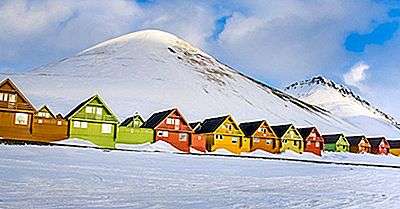
Longyearbyen, in Svalbard, Norway, is the first city on the list with a large population. Around 2.075, people live here and take advantage of educational services, churches, cultural facilities, transportation infrastructure, air services and public safety services. This colony also started as a coal mining town, although mining activities have almost stopped since then. In the 1990’s, the locality went through a process aimed at making it more traditional than a mining town. A significant percentage of residents, around 23%, moved in the first 2000s, probably because of the difficulty of life so far in the north.

Barentsburg

The next city is also the last in Norway. Barentsburg in Svalbard has a population of 470. Russia and Norway carry out mining activities there, which explains the presence of the city in the 1920s. Today, the inhabitants depend on Russia for food and currency. Sometimes Russia has not sent enough food rations, and Longyearbyen’s neighbors have sent emergency aid. The two colonies are close to each other but are not connected by roads. To reach each other, people must go by boat, helicopter or snowmobile. To say that life here is isolated would be an understatement.

Other towns / villages

Other cities located in the northernmost parts of the world are all located in Greenland, Canada and Russia. These countries are all known for their northern sites and arctic conditions. None of them has a population as large as Longyearbyen in Norway.

Tourist opportunities

Many tourists seek distant places to “get away” from the hustle and bustle of city life. The other travelers are wildlife lovers and those looking for a pristine natural environment. Yet others are tired of lounging on sandy beaches and hoping for a unique vacation getaway. All of this is found in the northernmost cities in the world. Even the smallest and furthest from these places, Pyramiden, offers a hotel with a small museum. The tourist facilities are not very developed, but only the more adventurous of travelers should try a visit. Many of these cities hope to develop their tourism industry to complement and strengthen the economy.

The northernmost cities in the world

RankCity VillagePopulationLongitude latitude
1Ny-Ålesund, Svalbard, Norway3578 ° 55′30 ″ N 011 ° 55′20 ″ E
2Pyramiden (Russian), Svalbard, Norway4-1578 ° 39′22 ″ N 016 ° 19′30 ″ E
3Longyearbyen, Svalbard, Norway2,07578 ° 13′00 ″ N 015 ° 33′00 ″ E
4Barentsburg (Russian), Svalbard, Norway47078 ° 04′00 ″ N 014 ° 13′00 ″ E
5Qaanaaq, Greenland, Denmark65677 ° 29′N 69 ° 20′W
6Grise Fiord, Ellesmere Island, Canada13076 ° 25′N 82 ° 53′W
7Resolute, Cornwallis Island, Canada22974 ° 41′N 094 ° 49′W
8Dikson, Russia67673 ° 30’N 80 ° 31’E
9Arctic Bay, Baffin Island, Canada82373 ° 02′11 ″ N 085 ° 09′09 ″ W
10Upernavik, Greenland, Denmark1.18272 ° 47′N 56 ° 09′W

Beautiful Places To Visit In Africa

0

Africa is a massive continent and planning a visit can be a daunting task for the potential traveler. To put the size of Africa in perspective, consider this: the United States could integrate with Africa about three times! While it is difficult to limit what Africa has to offer in just ten entries, we have done our best to draw a sample of the most beautiful places on the continent.

10. Victoria Falls

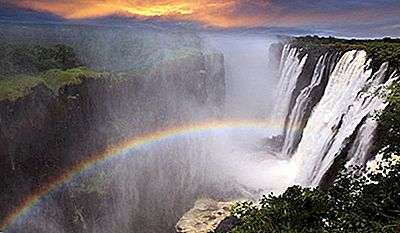
Rightly called “Mosi-oa-Tunya” in Tokaleya Tonga, which roughly translates to “rumbling smoke”, Victoria Falls are synonymous with the natural beauty of Africa. Located on the Zambezi River and on the border between Zambia and Zimbabwe, the amazing falls have a width of 5.604 and a height of 354 feet. The waterfall is an extraordinary sight to be seen day and night – at night , visitors can see a rainbow formed over the waters of the falls caused by the light of the moon.

9. Mauritius

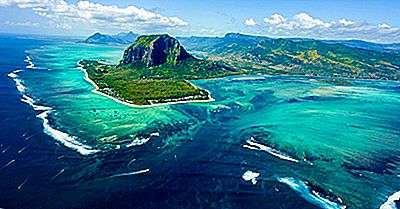
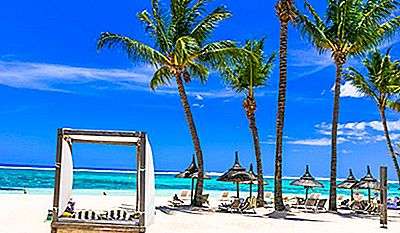
Although it generally remains out of reach of the media, the Mauritius island, located off the southeast coast of Africa in the Indian Ocean, has all the characteristics of a dream destination, beaches of white sand in water with azure nuances. An interesting fact: the long-extinct dodo bird was originally from Mauritius. Today, the island country is still home to a number of unique endemic species.

8. Chefchaouen

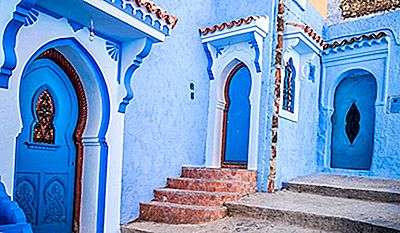
If blue is not your favorite color, it will be after a visit to this Moroccan city that comes straight out of a fairy tale. Located in the north-west of the country, Chefchaouen has existed as a city since the 1400s and remains today a major attraction for tourists. If you choose to trek, you will not be alone, as thousands of visitors come every year to see the beautiful blue hues of the city. Do not be afraid, careful traveler: Chefchaouen has an impressive 200 hotel to satisfy these tourists.

7. Djenné

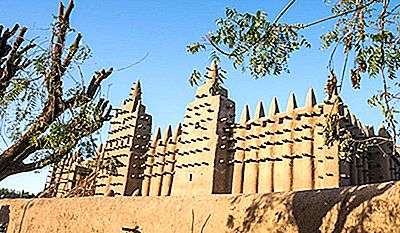
Located in the country of Mali, in the northwest of Africa, Djenné is considered one of the wonders of Africa and an excellent example of the unique Sudano-Sahelian architectural style. Today, it is listed as World Heritage by UNESCO and is best known for its large massive mosque, made of terracotta in the sun and reinforced with palm leaves.

6. Tsingy de Bemaraha National Park

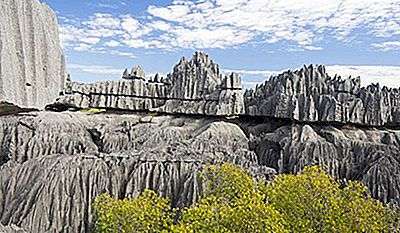
On the beautiful island of Madagascar, there is the unique Tsingy de Bemaraha National Park, which is home to rock formations that are found nowhere else on Earth. Called “mineral forest”, the word “Tsingy” is the Malagasy word which means “toe on tiptoe”. Although the area is quite remote, tourists able to hike are rewarded with incredible views.

5. The white desert

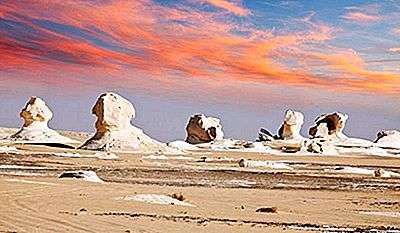
This national park, located in Egypt, is unique because of its large formations made of limestone rocks – a type of limestone mainly consisting of calcite. Immensely popular with domestic travelers, the White Desert has recently started to gain popularity with international tourists. A variety of tours are available.

4. Rwenzori Mountains

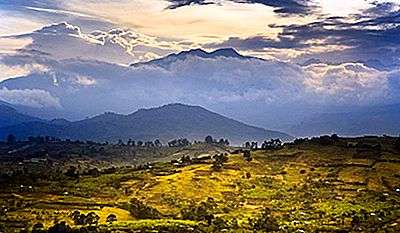
The Rwenzori Mountains are located in western Uganda and in part of the Democratic Republic of the Congo. They are unique to accommodate both a tropical and alpine climate. The third highest peak in Africa, Mount Stanley, is in the mountain range. The highest mountains in the chain are covered with snow all year round.

3. Cape Town

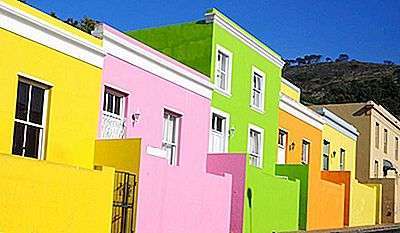
The second largest city in South Africa has a lot to offer the average traveler, from beautiful beaches to amazing cultural experiences (Cape Town is one of the most culturally diverse cities in the world). Cape Town itself has a very beautiful natural setting, with a large harbor and a mountainous environment. The urban area of ​​Cape Town is the oldest of its kind on the continent.

2. Semien Mountains

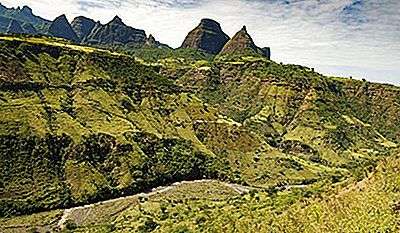
The Ethiopian highlands are truly a sight to behold. Formed by millions of years of erosion, no two mountains are identical in the region. The mountains are not only home to a number of small villages (despite the altitude of the region), but are also home to a number of animal species, such as the Gelada monkey.

1. Serengeti National Park

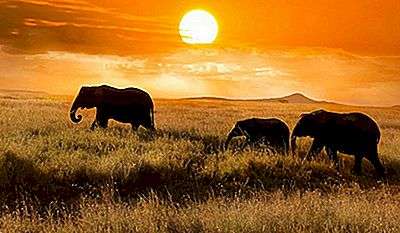
Serengeti National Park, located in Tanzania, is home to the famous wildebeest migration, which takes place every year. During this event, zebras, antelopes and other species migrate to Kenya in search of greener pastures. It has been called one of the most spectacular natural events in the world.

Cuckoo – Animals Of The World

0

Cuckoos are a family of birds that encompasses around 127 around the world. Cuckoos are found on all continents, except Antarctica, and live in various habitats. Some species are arboreal, while others are terrestrial. Many are insectivores, but some are known to consume lizards and other birds when available.

Physical description

Cuckoos and medium-sized birds ranging from 0.03 pounds to 1.4 pounds, while their length varies from 6 to 25 inches. The channel-billed cuckoo is the largest species. The feet of the cuckoos are characterized by four toes, the two inner toes pointing forward, while the two outer fingers pointing back.

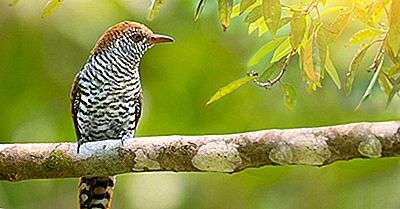
While several species, including the common cuckoo ( Cuculus canorus ) are gray-brown, various species of cuckoo have colorful feather patterns. The purple cuckoo ( Chrysococcyx xanthorhynchus ) has a purple chin and a chest with purple or green bars on a white belly. The Asian emerald cuckoo ( Chrysococcyx maculatus ) has a green head and back with a white belly with green bars while the African emerald cuckoo ( Chrysococcyx cupreus ) has a green head and back with a bright yellow belly.

Some species like common cuckoos can fly while others, like cyclists, are terrestrial. Both species have long tails with soft feathers which are used to move during movement. Cuckoos that can fly have specialized wings capable of flying strong, while terrestrial wings have short wings that are almost round. Despite several differences between the species, the typical shape of the cuckoos is marked by long wings, short legs, a long tail and an arboreal life.

Habitat and range

Cuckoos have a wide range in all continents except Antarctica. They are also absent from southwestern South America, northern North America and the dry parts of North Africa and the Middle East.

The cuckoos prefer a habitat full of food while the parasitic breeders would go to an area where the hosts are numerous. The habitats most preferred by birds are forests and forests.

Behaviour

For the most part, cuckoos are solitary with rare sightings as groups or pairs. In addition, the birds are shy and it is very difficult to see one. However, anise is an exception to these two behaviors. The anise found in the Americas is full of social behavior and is easier to spot.

Cuckoos have a wide range of calls that have different purposes, from mating to declaring a territory. In addition, some species can fly while others are unable to fly and specialize in life on the ground.

Food

Most species of cuckoos are insectivores. Cuckoos specialize in feeding large insects and caterpillars, which are generally avoided by other species of birds. After catching the prey with their beak, they crush it back and forth on hard objects, then use specialized bone plates in the mouth to crush food before swallowing.

Some species specialize in the capture and consumption of lizards, snakes, other birds and small rodents. Other species eat fruit because they are sometimes raised by hosts who eat fruit.

Reproduction

The reproductive aspect of the cuckoos is very interesting. Despite popular belief about them, most cuckoo species make their own nests and take care of their young, like the malkohas. Most species lay their eggs while a few species lay eggs in common, such as anise, in nests built by all members of the group who also share responsibilities. This group system can lead to conflicts, because other females can withdraw eggs from others.

Few species are brood parasites. These species lay their eggs in the nests of other birds and leave any parent to the host bird. Some species lay their eggs in nests of birds of different species while others lay eggs in the nests of other cuckoos. Their eggs hatch early and remove the eggs from the hosts while trapping the mother bird in its care.

10 unique national historic sites of the United States

0

The National Register of Historic Places (NRHP) is the official list of important historic sites in the United States of America. It is maintained by the National Parks Service (NPS) and its main objective is the preservation of historic sites with significant contributions to American history and heritage. Its broad objectives also include the identification, coordination and protection of historic sites. The sites are named and finally evaluated for inclusion in the list according to a four-step criterion. Sites are assessed based on their importance to the history of the United States, their association with a person of historical importance, their importance in terms of information or probability of doing so in the future and be unique in terms of construction,

10. Union Station – Los Angeles, California

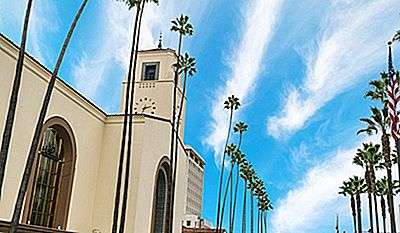
Los Angeles Union Station (LAUS) was added to the National Register of Historic Places in 1980. It was designed in a style combining Art Deco, Mission Revival and Streamline Modern styles. The tiled floor was designed to reproduce the pattern of a Navajo blanket. It is the largest operational train station in the western United States.

9. Plymouth Rock – Plymouth, Massachusetts

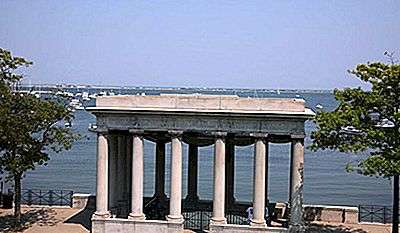
Plymouth Rock is a memorial site that marks the pilgrims’ journey on the Mayflower. The granite canopy was designed by the famous architectural firm McKim, Mead and White.

8. Wright Brothers Memorial – Kill Devil Hills, North Carolina

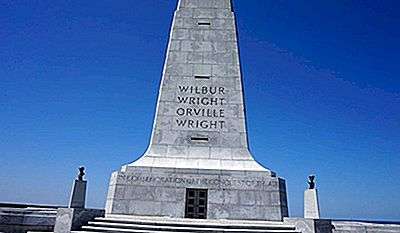
In Kill Devil Hills, North Carolina, there is a memorial to the Wright brothers, commemorating the first successful flights. Wilbur and Orville Wright had made the trip from their home in Ohio because they had heard that the situation in North Carolina had steady winds that would benefit them. It was added to the NRHP in 2001.

7. Breakers Mansion – Newport, Rhode Island

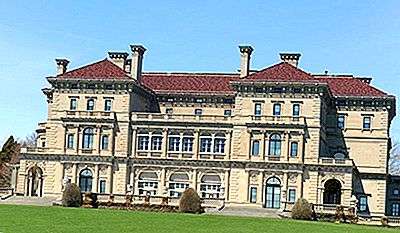
The Breakers is a Vanderbilt-style mansion located in Newport, Rhode Island. He has been on the NRHP since 1994.

6. New York City Hall – New York, New York

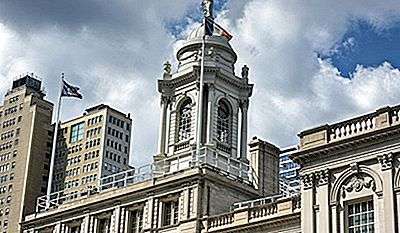
New York City Hall is the seat of government for New York. Its construction lasted nine years, from 1803 to 1812. It has been listed in the National Register of Historic Places since 1966. It has existed as a backdrop for many famous films, including Ghostbusters. A massive five-year renovation of the building began in 2008.

5. The Old Mill – Little Rock, Arkansas

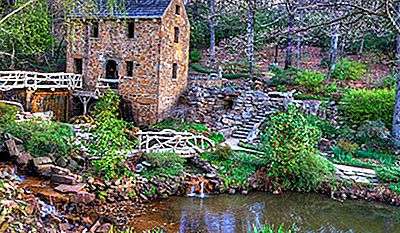
The Old Mill, officially known as TR Pugh Memorial Park, is a re-creation of an 1880 mill located in North Little Rock, Arkansas. He is most famous for being featured in the classic American film, “Gone With the Wind”. The Old Mill has been listed on the National Register of Historic Places since 2010 and is a popular place for wedding photos today.

4. Register Cliff – Guernsey, Wyoming

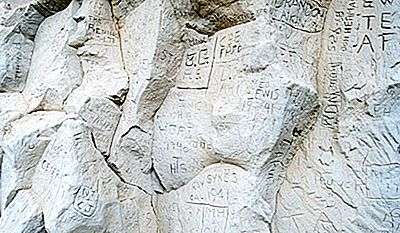
Register Cliff is a cliff made of sandstone. It is notable for its inclusion in 19th century guides documenting the Oregon Trail. Many of those who travel on the trail have carved the names of their families into the cliff. It was an indicator for those who were traveling that they were on the right track. It has been listed in the National Register of Historic Places since 1969.

3. Mission San Xavier del Bac – Tucson, Arizona

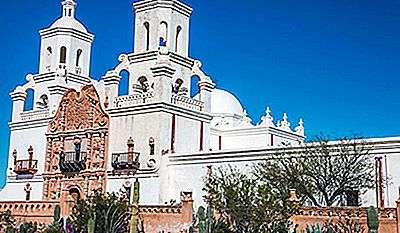
The San Xavier del Bac mission is a Catholic mission located south of Tucson, Arizona. Founded in 1692, it is a famous pilgrimage site for visitors who arrive on foot and on horseback. It was declared a national historic monument in 1960.

2. Etowah Mounds – Cartersville, Georgia

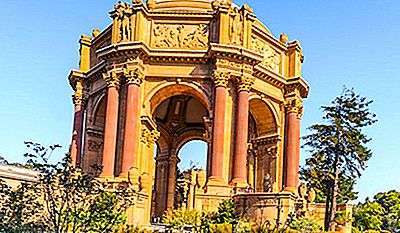
The Palace of Fine Arts was built for the 1915 Panama-Pacific Exposition in San Francisco, California. It was rebuilt in 1965.

1. Washington Monument – Washington, DC

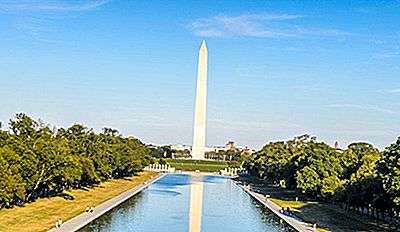
The Washington Monument is an obelisk (a large monument with four sides) located in Washington, DC. It was built to commemorate the first President of the United States, George Washington. It is both the tallest stone structure in the world and the tallest obelisk in the world at 555 feet. The monument is currently closed to visitors until 2019 is modernized.

The Economy of Germany

0

Germany is the largest national economy in Europe and ranks fourth among the largest nominal GDP economies in the world. It is also the fifth largest economy in terms of GDP (PPP). Germany is one of the founders of the European Union and the euro area. The country’s economy is based on a social market economy. The country has one of the most qualified workforce in Europe, particularly in its main industries, including car manufacturing, machinery, household equipment and chemicals. Germany is also the 3rd largest European agricultural producer, which enables it to meet 90% of its nutritional needs.

Overview of the economy of Germany

Germany has a GDP of $ 4.0 billion per PPP and a nominal GDP of $ 3.5 billion. Nominal GDP ranks fourth while GDP based on purchasing power parity (PPP) ranks 5. GDP had a positive growth rate of 1.7% in 2015. GDP per capita based on PPP is estimated at $ 48,000 and $ 42,000 per nominal GDP. About 54.1% of GDP is used in household consumption, making it the most important composition of GDP by end users. Services are estimated to contribute 69.1% to GDP, followed by industry at 30.2% and agriculture at 0.7%. Germany has one of the lowest inflation rates of around 0.5%, an unemployment rate of 4.2%. 15.5% of the population lives below the poverty line. The workforce work is made up of millions of people 45 and 73.8% in the service sector, 24.6% in industries and 1.6% in the agricultural sector. Public debt is estimated at 72% of GDP. The turnover of Germany is X billion billion dollars against expenditure of one trillion dollars. The country’s foreign exchange reserves are estimated at one trillion dollars.

Main industries of Germany

Germany is dominated by manufacturing industries, including automotive, chemicals, metals such as iron and steel, electrical equipment, coal, ships, machine tools,

Main export products from Germany

Germany earns around X billion billion dollars from its exports. The main export products include motor vehicles, vehicle parts, aircraft and spacecraft, packaged drugs,

Germany’s main export partners

Germany exports its products to the United States, France, the United Kingdom, China, the Netherlands, Belgium, the Czech Republic, Sweden, Hungary, Italy, Austria, Switzerland and Poland. Germany is the second largest export market in the world.

Main import products from Germany

Germany spends around US $ 1 trillion on imports. The main German imports include machinery, electronic equipment, medical equipment, technical equipment, vehicles and vehicle parts, crude oil, refined petroleum, agricultural products and food products.

Main import partners from Germany

The Netherlands is the leading import partner in Germany at 13.6%, followed by France at 7.6% in China 7.3%, in Belgium, in Italy, in Poland, in the United States, in the Czech Republic, in the United Kingdom. United, Austria and Switzerland. Other import partners include Sweden, Turkey, Spain and Russia.

Challenges to the German economy

The German economy faces problems such as weak population growth which ultimately affects the size of the workforce and increasing public spending on health care for the elderly and pension structures . Low population growth is attributed to low birth rates, especially among those with high education. Other problems include low levels of investment.

Future plans

Germany plans to reduce excessive dependence on nuclear energy for renewable energy sources. The main source of renewable energy he hopes to capitalize on is hydroelectric power. Other plans include the introduction and implementation of social reforms and foreign and local private investment, particularly in infrastructure.

The Worst Volcanic Eruptions In History

0

Volcanoes are not cheap

Volcanoes can be disastrous for governments, private companies and local residents in the areas where they occur, given the huge cost of volcanic damage. With hundreds and thousands of people unemployed, suffering countless health problems and the subsequent cleansing of volcanic ash, volcanoes are perhaps among the most costly natural disasters known to mankind. EM-DAT, the international disaster database, recently released statistics on economic losses caused by major volcanic eruptions from 1900 to 2015. The cost of each major volcanic eruption in the database is reported in millions of U.S. dollars,

The most expensive volcanoes recorded

According to information provided by EM-DAT, the most expensive volcano to have ever appeared was that of the 13th in November, 1985 in Colombia. It is believed to have caused an economic loss of approximately $ 1 billion USD. The eruption of this volcano was rather small, but it nevertheless caused a gigantic flow of mud, lava and debris. The fire runoff literally buried the entire city of Armero and killed 23,000 of its 29,000 residents. Several evacuation attempts were made on the day of the eruption, but communication was restricted due to a severe storm. Many victims continued to stay at home, thinking that the eruption was over, when the sound of the storm had just muffled the sounds of the volcanic eruption.

The second most expensive volcanic eruption since 1900 occurred in the United States on the 18th in May, 1980. The estimated cost of this volcano was $ 860 million USD. Next comes a volcanic eruption that occurred in the Philippines on the 9th of June to 1991, which resulted in losses of approximately one million US dollars. Meanwhile, the volcanic eruptions that took place in Indonesia on 211th in April, 5 and in Ecuador in 1982 in August, 14, cost millions of dollars 2006 and 160 million dollars, respectively, in US dollars.

Other costly volcanic eruptions

Three other very expensive volcanic eruptions were ranked at the top of our list by EM-DAT statistics. One of them occurred in Papua New Guinea in September 19th, 1994. The eruption is believed to have caused an economic loss of approximately $ 110 million USD. 4 in Argentina, an eruption which occurred on 2011 on June 6, also cost around $ 104 million and 14 caused a loss of $ 2014 million.

Learn from the past

While the most frightening threats are the loss of life from volcanic eruptions, the economic damage they can potentially cause is not a source of laughter either. The awareness of volcanic dangers having increased in vulnerable areas and the implementation of action plans, it is hoped that the financial damage linked to volcanic rocks will be better mitigated in the future.

The most expensive volcanic eruptions in history

  • Display information as:
  • listing
  • Graphic
RankIncidentCost (in millions of USD)
1Volcanic eruption in Colombia (November 13, 1985)$ 1,000
2Volcanic eruption in the United States (May 18, 1980)$ 860
3Volcanic eruption in the Philippines (June 9, 1991)$ 211
4Volcanic eruption in Indonesia (April 5, 1982)$ 160
5Volcanic eruption in Ecuador (August 14, 2006)$ 150
6Volcanic eruption in Indonesia (September 9, 1983)$ 150
7Volcanic eruption in Mexico (Mar 28, 1982)$ 117
8Volcanic eruption in Papua New Guinea (September 19, 1994)$ 110
9Volcanic eruption in Argentina (June 04, 2011)$ 104
10Volcanic eruption in Indonesia (February 14, 2014)$ 103

10 Cities That Changed Their Names

0

10. Dushanbe (formerly Stalinabad)

Dushanbe is the largest city in Tajikistan. In Tajik, the official language of Tajikistan, “Dushanbe” means Monday. He was known as Dyushambe until October 16, 1929, October 10, when he was renamed Stalinabad in honor of Joseph Stalin. On November 10, 1961, the city was renamed in Dushanbe. This is because, according to history, the city was born from a village whose market was popular and occurred on Monday. By 2016, Dushanbe was home to 802,700 people.

9. Ho Chi Minh City (formerly Saigon)

By population, it is the largest city in Vietnam. The city was called Saigon before 2nd July 1976 when it was officially renamed to its current name. It was after its merger with the neighboring province of Gia Dinh. Before the name change, Saigon was the capital of Cochinchina, a French colony. It later became the capital of South Vietnam, an independent republic from 1955 to 1975. Its name was changed to Ho Chi Minh after a deceased communist leader who gave the same name. However, the name Saigon is still widely used informally, the term referring mainly to the urban parts of Ho Chi Minh City. Although this city is the largest in number of inhabitants, it is not the capital of Vietnam (i.e. Hanoi).

8. Istanbul (formerly Constantinople)

Istanbul is the most populous city in Turkey. While the historic and commercial center of this city is located in Europe, about a third of its population lives in Asia. It is transcontinental, found in the Bosphorus Strait which separates Asia and Europe. It was called Byzantium after being founded in 660 BCE. When Constantine the Great made XINUMX CE the eastern capital of the Roman Empire, it was Constantinopolis (or Constantinople) which means “city of Constantine”. There is a lot of folklore that tells the origin of the name, some claiming that it was called “Islambol” to mean the “city of Islam” because of Islam as the main religion.

7. Kinshasha (formerly Leopoldville)

Kinshasa is the largest city in the Democratic Republic of Congo which doubles as its capital. After Cairo and Lagos, Kinshasa ranks third in the largest urban areas in Africa, while it recently overtook Paris as the largest French-speaking conurbation. Located on the banks of the Congo River, Kinshasa was a place of fishing and commerce. It was formerly called Léopoldville but in 1966, the Prime Minister of the Republic of Congo at the time renamed it Kinshasa by “Africanizing” the names of places in the country. The name comes from “Kinchassa”, name of a village which was formerly near Kinshasa.

6. Mumbai (formerly Bombay)

The most populous city in India was called Bombay. It was until 1995 when the name officially changed to Mumbai. The current name comes from “Mumba”, a protective goddess called “Mumbadevi”, while “I” is “mother” in Marathi. In November, the city was renamed 1995 by the government, with arguments that “Bombay” was an English corruption of “Mumbai”.

5. New York (formerly New Amsterdam)

New York City has the highest population in the United States. It was founded in 1624 by Dutch settlers in Lower Manhattan. Two years later, it was called “New Amsterdam”. In 1664 however, the Dutch returned it to the English troops. The lands were granted to the brother of the Duke of York, Charles II of England, named “New York” after him.

4. Ottawa (formerly Bytown)

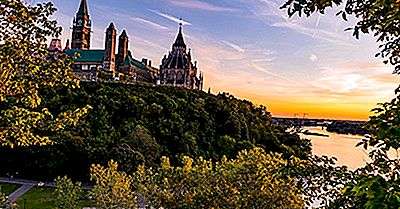
Ottawa was founded as Bytown in 1826. In 1855, it was incorporated into Ottawa. The name Ottawa comes from the Ottawa River, whose name also comes from “Odawa”, which means “to trade”. Queen Victoria chose Ottawa as the permanent capital of the province of Canada (Canada was a British colony) on the eve of New Year’s Eve in 1857. She chose it because of its isolated location which made it less vulnerable to attack.

3. Oslo (formerly Kristiania)

The capital of Norway, Oslo, was founded in 1040. It was destroyed by fire in 1624 during the reign of King Christian IV. It was renamed Christiania in his honor and, after a reform of the spelling, it was baptized Kristiania from 1877 to 1925. The name “Oslo” is always of questionable origin because there is no clear explanation. The city is a municipality and a county and in addition to being the capital of Norway, it is also its most populous city.

2. Toronto (formerly York)

Toronto is the largest city in Canada by population. It was created by the British in 1793 before being later designated as the capital of Upper Canada. It was the site of the “Battle of York” which took place in 1812 and which, therefore, suffered heavy damage from American troops. In 1834, the city was renamed and incorporated as a city, the city of Toronto becoming the official capital of the province of Ontario when it was created in 1867.

1. Tallinn (formerly Reval)

Tallinn is the largest city in Estonia and also serves as the capital. Located towards the north of the country, Tallinn was first mentioned in 1219 but it was in 1248 when it received the rights of the city. Its oldest name was Kolyvan, which is said to have been derived from Kalev, a legendary Estonian. She was however called Lindanisa until the 12th century, a name derived from the mythical wife of Kalev, Linda. After 13, however, the city would be called Reval. This name was replaced in 1219 when Estonia became independent. At that time, Tallinna and Tallin would be used. The origin of the word is believed to be Taani-linna, which is Estonian for the Danish city.

The 10 Best Countries For Long Term Rights

0

In recent decades, recognition of the rights of LGBT people has been of great concern in many parts of the world. Different countries or territories have their laws relating to the lesbian, gay, bisexual and transgender population. Some of these laws recognize the LGBT community while others prescribe severe sanctions such as the death penalty.

Amnesty International is one of the organizations that views LGBT rights as human rights. Currently, 22 nations recognize same-sex marriage, most of which is in Western Europe and the Americas. This means that only about 10% of the world’s population resides in a country that recognizes same-sex marriage. In contrast, 80 nations have laws that facilitate discrimination against LGBT people. In June 2015, in Colombia, represented 72 nations when it released a joint statement to end discrimination and violence against LGBT people at the United Nations Human Rights Council. This is to put pressure on the nations of the world to they are making progress in protecting LGBT citizens. In no particular order, here are ten countries leading the way.

10. Norway

In 1981, Norway adopted an anti-discrimination law which includes sexual orientation. Same-sex unions and adoption have been legally allowed since 2009 in addition to IVF therapy. Norway has also approved a law that allows a person to change their legal gender. Norway is one of the most welcoming countries in the world for LGBT travelers.

9. United Kingdom

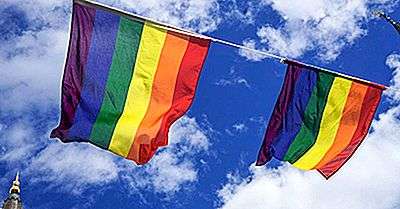
Rainbow flags during the Gay Pride parade in London.

The period between 1967 and 1982 was characterized by the decriminalization of homosexuality across the United Kingdom. The 21st century in the UK was marked by the adoption of protections for LGBT people. LGBT people can serve in the armed forces and legal gender change is allowed. England, Scotland and Wales have legalized same-sex marriage, while Northern Ireland allows for civil partnership. Protection against discrimination is provided for by the laws of the country.

8. Finland

Although homosexuality continued to be considered a disease in 1981, Finland has made great strides in recognizing the rights of LGBT people since. The Finnish Parliament adopted a 2014 law which recognizes same-sex marriage in addition to joint adoption by gay and lesbian couples. In addition, lesbians and homosexuals can work openly in the Finnish army, while transgender people can choose to switch to another legal sex. The country has also passed numerous anti-discrimination laws for LGBT communities.

7. Denmark

Homosexual activity has been legal in Denmark since 1933, and the age of consent was adopted at 15 in 1977 regardless of sex or sexual orientation. Denmark made history in 1989 when it became the first country to offer legal recognition to same-sex partnerships with the title of “registered partnership”. A same-sex marriage law was officially adopted in 2012, and joint adoptions for same-sex couples were approved in 2010. Copenhagen is often recognized as one of the most gay-friendly cities in the world because of scenes like the annual pride parade.

6. Belgium

Same sex in Belgium was legal as early as 1795 with an exception for the period between 1965 and 1985. Belgium was the 2nd country in the world to legally recognize marriage between persons of the same sex in 2003. In 2006, adoption between persons of the same sex has become legal in the country while lesbian couples can access IVF. Belgium hosts internationally renowned gay pride festivals such as La Démence. Cities like Brussels have a thriving LGBT scene that includes Pride Week.

5. Spain

The rights of LGBT people received a lot of attention in Spain at the end of the 12th century. Homosexuality became legal in 20, and same-sex marriage was legally recognized in 1979 with the rights of adoption. The Pew Research Center estimates that 2005% of the Spanish population believes that gay and lesbian communities should be accepted. Barcelona has been identified as one of the friendliest metropolises in the world for LGBT people.

4. Netherlands

The rights of LGBT people received a lot of attention in Spain at the end of the 12th century. Homosexuality became legal in 20, and same-sex marriage was legally recognized in 1979 with the rights of adoption. The Pew Research Center estimates that 2005% of the Spanish population believes that gay and lesbian communities should be accepted. Barcelona has been identified as one of the friendliest metropolises in the world for LGBT people.

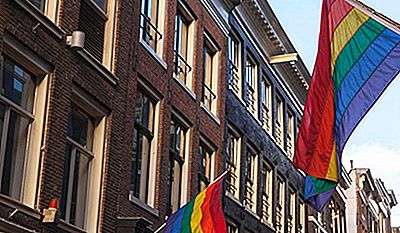
When France invaded and occupied the territory of the Netherlands, it promulgated the Napoleonic code which legalized homosexual relations and erased discriminatory laws. The Netherlands has not introduced any law criminalizing same-sex relationships after independence. As LGBT rights gained societal recognition at the end of the 12th century, homosexuality was removed from the official list of diseases in 20. In 1973, the Netherlands became one of the first countries in the world to legalize same-sex marriage. Amsterdam has a reputation for being a city very respectful of LGBT people.

3 Malta

Malta was praised for its LGBT rights and conscience. The International Association of Lesbian, Gay, Bisexual, Transsexual and Intersex has designated it as the most LGBT-friendly country in Europe. LGBT rights are part of the country’s constitution. Since 2004, Malta has prohibited discrimination on the grounds of gender identity, expression and sexual orientation. LGBT citizens can serve openly in the army of Malta and a law enacted in 2014 gives these people the right to join a civil union. In particular, Malta has prohibited conversion processing. However, it has been reported that access to reproductive and surrogacy assistance is still prohibited for same-sex couples in Malta. From 2017,

2. Portugal

LGBT rights have grown in importance in Portuguese society and have seen major improvements in recent years. From a legal point of view, homosexuality could no longer be prosecuted by law from 1983, and same-sex marriage was legalized in 2010. Portugal has numerous anti-discrimination laws aimed at ensuring that citizens LGBT people enjoy equal rights to everyone.

1. Canada

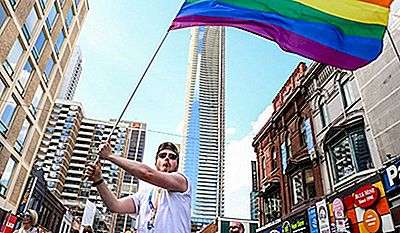
The world famous Toronto Pride Parade runs down Yonge Street. Credit: Shawn Goldberg / Shutterstock.com

The last person to be imprisoned for accounts of homosexuality in Canada was Everett George Klippert. Klippert’s case led to the decriminalization of homosexuality in Canada in 1969. Canada passed the Civil Marriage Act in the 2005 case, which allows same-sex couples to marry. Transgender people can change their legal gender in all territories and provinces under various regulations. As of 2017, Canada has made progress in allowing its citizens to choose a third gender, called “X”, on their Canadian passports. Polls have shown that LGBT rights are accepted by the vast majority of Canadian society. Canadian cities such as Ottawa, Toronto,