The term “lone wolf terrorism” refers to acts of violence committed by a single perpetrator. This person acts independently and without the help of outside organizations. A lone wolf terrorist can, however, follow the ideology of a particular organization or group and commit acts of terror to show support for that group. The planning and methods used by a lone wolf terrorist are independent. Even if individuals believe in the mission or purpose of a larger organization, they may never have contact with the group. In this way, they remain outside the detection of the police and cannot be easily controlled, which makes them difficult to arrest.
History of the term: Lone Wolf Terrorism
The term “lone wolf” has been used since the 12th century to describe the person who separates from the pack. The term has been used in detective films and novels for at least 19. A man who called himself the “Lone Wolf” tortured and terrorized women in Boston in the United States in 1914. The term was used to describe people who are distant from society; those who never belong.
The term “lone wolf” has been associated with terrorism dating back to the 1980s. Louis Beam, a member of the KKK and of the Aryan nation, wrote an article for his supporters, encouraging a revolution without leaders. He believed that a revolution against the American government would be more fruitful if it were led by independent individuals.
This idea continued to be promoted in the 1990s, by Tom Metzger and Alex Curtis. These two individuals, known to white supremacists in the United States, followed Louis Beam’s recommendation and encouraged their white supremacist colleagues to engage in independent acts of violence in order to prevent the police from dissuading them. . The FBI and the San Diego Police Department have launched an investigation into Alex Curtis, calling him an operation “Lone Wolf”.
Today, the term is used by the media, politicians, law enforcement officials and the general public.
The spread of lone wolf terrorism
The lone wolf terrorism was adopted by Al Qaeda after September 11, 2001, when US military forces attacked its operational base in Afghanistan. Al-Qaeda leaders have urged their supporters to take part in independent acts of violence against their perceived enemies at all times. Years later, members of the Islamic State of Iraq and Syria, also known as the Islamic State of Iraq and the Levant (ISIL and ISIL), followed suit by encouraging their supporters to participate to isolated terrorist acts.
Adopting the lone wolf terrorism tactic has indeed changed the fact of terrorism. When terrorist acts were once associated with major events orchestrated by a long chain of command, terrorist acts are increasingly carried out by autonomous cells or by individuals.
In fact, statistics show that throughout North America and Western Europe, the terrorism of the lone wolf associated with radical Islam increased between 1990 and 2013. This increase was noted in the number of countries targeted, in a certain number of injuries and deaths and in a number of attacks on the military.
Solitary Terrorism And Mental Health
Mental health experts believe that lone wolf terrorists tend to have psychological anomalies, prompted by personal or political grievances. Their mental instability may be the main factor that makes integration or belonging to everyday society difficult. This rejection can push them towards radical or extreme ideological groups and their causes. A study has shown that a lone wolf terrorist is 13.5 more likely to have a mental illness than a terrorist who works in a large group.
A healthy body can increase its lifespan, which makes it more productive, fulfilling and active. A healthy body has a well-developed immune system that protects it from the risks of chronic diseases such as diabetes, cancer and other diseases. A healthy person is not only a healthy body, but also includes a stable mind and spirit. Some of the ways to keep your mind, mind and body healthy is to adopt a healthy lifestyle and stay in touch with your emotions through positive thinking. There are so many ways to achieve a healthy lifestyle while maintaining a healthy mind and touching emotions, and yoga has gained popularity worldwide to achieve this.
What is yoga?
Yoga is a word borrowed from the Sanskrit word “Yuj” which means “to join” or “to unite”. It is a form of exercise that emphasizes breathing, strength and flexibility to improve overall well-being. The main components of yoga are breathing accompanied by a series of movements aimed at increasing strength and flexibility. Yoga has its origins in ancient India which dates back to 5,000, and experts such as Gurudev Sri Sri Ravi Shankar believe that yoga is not only an exercise but also an integration of emotions and spiritual elevation with mystical elements beyond imagination and If you want to play online games click this link
.
History of Yoga
The origin of yoga is often a subject of debate, although accepted sources include the Indus Valley civilization and the state of eastern India during the Vedic period. The Pashupati seal found in the Indus Valley represents figures and positions that resemble common yoga and meditation postures. However, Indian researchers often promote the belief that yoga developed from ascetic practices within the first Sramana movement. In addition, the first use of the word yoga is a hymn of the Rig Veda which was dedicated to the god of the rising sun in the morning, although the hymn does not describe yoga or current practices. The first mention of the word yoga in terms of modern practice is found in Katha Upanishad as a definition of constant control of the senses. Yoga is also discussed in the Sutras of Hindu philosophy and the Macedonian historical texts. The Bhagavad Gita uses the term yoga in different forms and devotes an entire chapter to traditional yoga practices. Yoga was introduced to the western world in the 12th century along with other Indian khajana satta matka.
Yoga Goals
A release known as “moksha” is the ultimate goal of yoga. However, the form that moksha takes can vary. According to David Gordon White, the principles of yoga have evolved over time to include:
1. A meditative way to discover perception and cognition as well as to free oneself from suffering and to achieve inner peace and salvation.
2. Raise and expand self-awareness to be able to coexist with anyone and anything.
3. A path towards omniscience allowing to understand the permanent and impermanent realities which surround the life of an individual.
4. A technique to enter other bodies or generate multiple bodies and reach other supernatural realizations.
These principles put forward by White are also considered to be the description of yoga practices and the ultimate goals that must be achieved in order to benefit from yoga classes. The principles are recorded in Hindu literature and in texts such as Bhagavad Gita, Nyaya, Tantric and Nikaya.
Different yoga schools
Yoga has been used to describe different practices and methods including Buddhist and Jain practices. In Hinduism, yoga is considered a philosophical school and is one of the six schools of Astika. The Yoga Sutras of Patanjali are considered fundamental scriptures of classical yoga. The type of yoga described in Patanjali Sutras is Ashtanga yoga and is the central text of the Yoga School of Hindu Philosophy. Hatha yoga focuses on strengthening physical and mental strength. Meditation among Buddhists encompasses a different meditation technique that leads to the development of attention, focus and insight. Meditation is at the heart of Jainist spirituality with the three jewels. Meditation is about achieving salvation and bringing about
Importance of Yoga
Yoga promotes relaxation and reduces stress while increasing general health and endurance. In America, yoga is often marketed as a supplement to a cardio program. Yoga is especially recommended for people with arthritis because it is a gentle way to promote strength and flexibility. Yoga also improves a person’s mental health and reduces the risk of asthma, while improving mood and anxiety. However, as with other forms of exercise, care must be taken when doing yoga to prevent injury and medical complications.
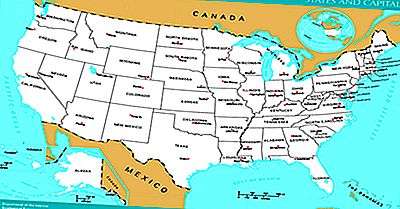
Today, the 50 states constitute the country. The continent, located between Canada and Mexico, is made up of 48 states. This area is called the contiguous United States. Non-contiguous states include Hawaii, an island in the Pacific Ocean, and Alaska, a vast region connected to Canada’s west coast. The eastern state has a city that serves as the political capital.
Choice of state capitals
The choice of the capitals of the United States followed little uniform reasoning, some being the most populous cities in the state and others being located in the center. In other cases, the seats of state government are neither economically important nor well located. So how did lawmakers decide which cities would become the state capital? The answer: it depends, each state has a unique history.
Voters have often lobbied their politicians to have their hometowns distinguished as the capital. The belief behind this was that capital status would stimulate economic growth or encourage settlement. History has shown that this theory is not always the case. Other capitals of the United States were chosen while the country was still concerned about the British attacks. They chose geographically protected cities in the event of war. Dover, established in 1777, from Delaware is a perfect example. Politicians chose Dover for New Castle, an important port city that could be easily attacked by approaching ships. Other capitals, such as Trenton in New Jersey and Tallahassee in Florida, were chosen because they were the first state settlements. These capitals already had a large population and had already played an important role in the history of the country. Many capitals which today seem strangely located or sparsely populated were once very important cities for trade and industry.
Given that so many capitals do not have the most powerful state economies, what are their roles today?
Roles of State Capitals
Today, the capitals of the United States are important as the center of state government. Legislation is written, argued, voted and adopted in capitals. Among the most populous state capitals are Phoenix, Arizona; Indianapolis, Indiana; Austin, Texas; Columbus, Ohio; and Boston, Massachusetts.
Phoenix, first called Pumpkinville, was first established as an agricultural center in 1867 and was established as a city in 1881. The economy experienced significant growth after the construction of the railway during the same decade. The population increased, the municipal government was organized and the state capital was transferred from Prescott to Phoenix in 1889. Today it is the most populous state capital of the country and is home to universities, hospitals, banks and a large airport.
Indianapolis, the second most populous city, has always played an important role in the development of Indiana. Founded as the capital in 1825, the city was originally founded in 1816 and is inspired by Washington, the national capital. Again, the 1850 railroad helped this economy grow and prosper. His access to the railroad also made him a critical actor during the civil war, when he joined the North. This city also established a banking sector at the beginning of its development. Today, it continues to be the economic and cultural center of the state.
Least populated state capitals
The least populated capitals in the United States are Montpelier, Vermont; Pierre, South Dakota; Augusta, Maine; Frankfort, Kentucky; and Helena, Montana.
Montpelier, Vermont currently has a population of approximately 7.705, making it the state’s least populated capital. It was the first settlement in Vermont and was named in honor of a French city to recognize the French for their support during the American Revolution. Today, this city is both the state capital and the county seat. People commute every day for work and on a regular Monday afternoon, as many as 21,000 could be within the city limits. Besides public administrative functions, higher education also plays an important role in the economy and the city hosts colleges 3 and university 1.
For an overview of all the capitals of the United States and their year of establishment, a list is published below.
When people think of Egypt, they can create a picture of a country with miles of endless deserts that cannot support any form of wildlife, except the big-tailed lizard and the sand rat that tolerate the desert environment. However, the land of the pharaohs has an abundance of animals beyond imagination. There are 28 protected animal sanctuaries in the country, ranging from wetlands, coastal environments, geological formations and national parks. Here are the native animals of Egypt.
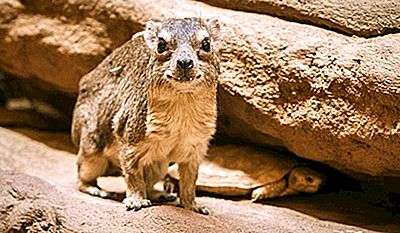
10. Cape Hyrax
The rock or cap hyrax is native to sub-Saharan Africa with the exception of Madagascar and the Congo basin. It is also found in Algeria, Libya, Egypt, Lebanon, the Arabian Peninsula, Jordan and Israel. The hyrax is an exceptionally adaptive animal that can survive in tropical and desert climates provided it can find food and shelter. It is known as rock hyrax because it prefers to live in rocks, because it cannot dig its own burrows. The hyrax feeds on grass, fruits, insects, lizards and bird eggs. In Egypt, the hyrax is found mainly near the oasis or along the banks of the Nile.
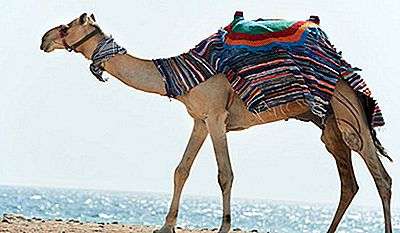
9. camel
Camels are one of the most remarkable animals found in Egypt. Camels are well known for their distinctive “bumps”, which are actually large fatty deposits and not at all filled with water, contrary to popular belief. Camels live for an average of 40 to 50’s. Camels are well adapted to the desert environment as they can go ten days without drinking.
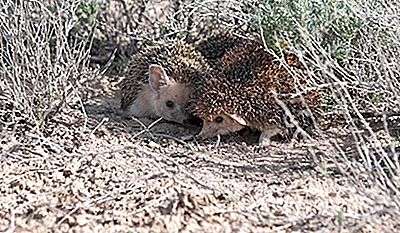
8. Long eared hedgehog
The long-eared hedgehog is a smaller species of the hedgehog. It is native to the Middle East, Central Asia, Egypt and Libya. This hedgehog is distinguished from other hedgehog species due to its small size and long ears. Although it prefers to feed on insects, the hedgehog can also feed on plants and small vertebrates. They are found in Egypt’s national parks, especially in the greener areas where insects and grass can be found.
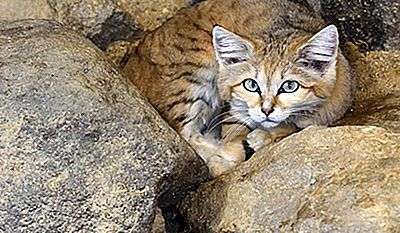
7. Sand cat
Known as one of the most elusive of all feline species, sand cats are said to be in danger in Egypt. Like camels, sand cats can live for a very long time without access to water. Cats are mainly found in the southeast of the country.
6. Gazelle dorcas
Dorcas gazelle is native to the desert and semi-desert of Egypt and the Middle East. It is considered a vulnerable animal in danger of extinction. The gazelle is very adapted to the desert environment and can last several months without water or limited food. The Dorcas gazelle inhabits the coastal plains and stony deserts of Egypt where it has adapted to feed on acacia seeds and desert plants. These animals once roamed the western and eastern deserts of Sinai in large populations, but today there are less than 1,000 in the wild.
5. Dugong
The dugong is a distant cousin of the manatee. We sometimes speak of “sea cow” or “sea camel”. The largest population of this animal is found on the north coast of Australia, but it spreads along the Persian Gulf and the Red Sea. In the Red Sea, the dugong is mainly found in the Egyptian regions of Marsa Alam and Abu Dabbab. The dugong of this region attracts thousands of tourists, especially those interested in diving and snorkeling. However, the number of these animals is decreasing in Egyptian waters due to climate change and pollution.
4. Caracal
The caracal is sometimes called the African, Persian or desert lynx, although it is not a lynx. It stretches across southwest Asia and Africa, where you can find meadows and deserts. The caracal is found in the deserts of eastern and northern Egypt, although their number is small. It is classified as an endangered species in North Africa. The caracal is a member of felines and makes sounds common to felines, but the animal is known to bark when threatened by a predator.
3. Sand rat
The sand rat or the large sand rat is a rodent native to the deserts of North Africa and the Arabian Peninsula from Mauritania to Egypt, Sudan and Saudi Arabia. They are highly adaptive rodents and are sometimes found in wetlands along the coast. In summer, they feed at night and rest under rocks and burrows during the day.
2. The Egyptian mongoose
The Egyptian mongoose, as its name suggests, is found throughout Egypt, although the desert is not the ideal habitat for these animals. Instead, they prefer to live in areas with easy access to water such as forests. Unlike many species of this species, the Egyptian mongoose is a species of little concern.
1. Hyena
The striped hyena is still present in parts of Egypt, although the population is gradually decreasing and has been classified as threatened by IUCN. There are 10,000 striped hyenas scattered throughout southwest India, the Middle East and sub-Saharan Africa. They were once found in large populations along the Nile Valley and the Nile Delta, from where they sometimes wandered into the city in search of food, but are now barely visible even in the wild .
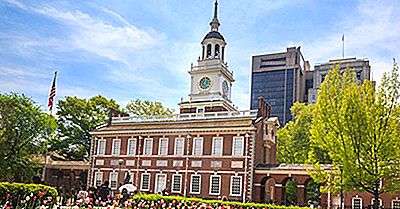
Independence Hall is located in Independence National Historic Park in Philadelphia, Pennsylvania, in the United States. From 1775 to 1785, this building served as the main meeting place for the second continental congress. It is perhaps the most famous, however, as the site where the Declaration of Independence and the Constitution of the United States were signed. These two documents formed the basis of this country and provided a framework for other legislators around the world. The Independence Hall was listed as a UNESCO World Heritage Site in 1979.
Why is Independence Hall a UNESCO World Heritage Site?
The Declaration of Independence and the Constitution of the United States established a model for the global right to democracy and self-government. Independence Hall is a symbol of these rights. As such, this building meets criterion VI (the universal principles of the right to freedom and revolution) to become a UNESCO World Heritage Site. These two documents have influenced the founding documents of many newly created nations around the world. The main elements of these historical documents were even used to create the Charter of the United Nations.
The original purpose of Independence Hall was to become the meeting place for the Pennsylvania Commonwealth Assembly. It was designed by Andrew Hamilton, a lawyer, and Edmund Woolley, a master builder. The construction of the Independence Hall took place from 1732 to 1753. It was completed in red bricks with a wooden bell tower, where the bell of liberty was once hung. The building has retained its authentic presentation, with original exterior and interior finishes. Its location, the National Independence Historical Park, adds to the authenticity of the building as the park is home to other 18th and 19th century architecture.
The structure has been well preserved over the years through conservation studies and technical advice. In the middle of the 12th century, steel supports were inserted into the building to reinforce the building. The interior has also been redesigned according to historical accounts of its original appearance. Today, Independence Hall is threatened by acid rain, air pollution, crowds of visitors and nearby development efforts.
Independence Hall
Although the city of Philadelphia owns Independence Hall, it is managed by the National Park Service. The Independence National Historic Park was created specifically to protect and preserve the Independence Hall. Because it is managed by a federal entity, it enjoys significant protection. In addition, this building is one of the most important historical monuments in the country. Maintaining it and keeping it in good condition will always be one of the main objectives of all levels of government.
A general management plan has been created by the National Parks Service to guide its administration. In this plan, it is clearly indicated that the Independence Hall is also a UNESCO World Heritage site as an important factor for the consideration of its administration. To ensure its continued preservation, several attempts have been made to maintain its security and stability. During the 1990s, for example, the government installed a new fire detection and suppression system as well as a security system. In 2002, after the September 11 attacks, the government implemented more stringent security measures in terms of screening visitors. In order to preserve its external appearance, the bell tower underwent rehabilitation efforts in 2013.
The US presidential election of 1912 had four candidates representing four political parties. Republican President Theodore Roosevelt returned from a trip and found that William Taft had been appointed president by the Republican party. Roosevelt, against Taft’s growing conservative policy, created his own political party, the Progressive Party. The other candidates were Woodrow Wilson for the Democrats and Eugene Debs for the Socialists. During his campaign, Roosevelt was hit in the chest. He managed to finish his speech before removing the ball. In the end, Democrat Wilson won the elections with less than 50% in several states. It was because the Republican vote was split between Taft and Roosevelt. William Taft finished fourth.
9. 1824 –
The election of 1824 is considered controversial because, during the first ballot, no candidate obtained the majority of votes. The parties vying for the election were Andrew Jackson, John Quincy Adams, William Crawford and Henry Clay. They all belonged to the Democratic-Republican party. The election was decided by the House of Representatives, of which Henry Clay was the Speaker of the House. He was eliminated from the race and the House lobbied for John Adams, removing several key state officials from Andrew Jackson. John Adams won the election and appointed Henry Clay as secretary of state. Andrew Jackson believed it was political corruption.
8. 2000 –
The 2000 election was marked by problems with votes, recounts and trials. The two candidates were Republican George W. Bush and Democrat Al Gore and the Florida state election results were one of the main points of contention. The votes were too close, claiming Gore the winner first and then Bush. The Florida Supreme Court ruled for a recount and 5 a few weeks later, the United States Supreme Court overturned that decision. Bush won only by the electoral votes of 5 and was the first president of the 112s to sit without the majority popular vote.
7. 1800 –
In 1800, the electoral system was slightly different. Voters would choose from among the candidates 2. the one with the majority vote became president and the one in second place became vice-president. This led Thomas Jefferson and Aaron Burr to take the top spot, both getting more votes than the president at the time, John Adams. For the first time, the House of Representatives had to decide the winner. Alexander Hamilton, the Secretary of the Treasury, campaigned for Thomas Jefferson. Jefferson won and Burr became vice president. The results of this election prompted Congress to adopt the 12th amendment which made voting for the president and vice-president separate. Three years later, Aaron Burr killed Alexander Hamilton in a duel.
6. 1876 –
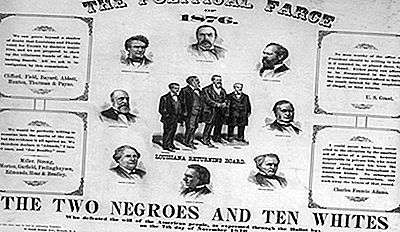
The 1876 election was between Democrat Samuel Tilden (then Governor of New York) and Republican Rutherford Hayes. Tilden won more popular and electoral votes than Hayes, however, he did not have vote 1 for the mandatory 185 electoral votes required to win. Florida, Louisiana and North Carolina had results too close to allocate their combined 20 electoral votes, and Oregon replaced a voter in the midst of the conflict. The country was torn apart and close to war. Congress responded by creating an emergency commission made up of representatives from Congress, senators and Supreme Court justices. In total, the group was made up of 7 Republicans, 7 Democrats and 1 Independent. They decided in favor of Hayes, but the Democrats, disagreed with the results, threatened to block the official counting of votes. The parties met to negotiate and agreed that the Democrats would accept Hayes if he wanted to withdraw troops from the south of the country. Hayes was sworn in and ended the era of reconstruction in the south.
5. 1948 –
Democratic candidate Thomas Dewey and members of his own party opposed Democratic President Harry Truman. He lost the support of conservative Democrats in the south who disagreed with his position on equal African American civil rights and formed a new political party, called the Dixiecrats. According to a Gallup mid-October poll, Dewey would beat Trump by 5%. The results were not released to the public until polling day, and Truman believed he had lost the election. The Chicago Tribune even published the following day’s newspaper with a headline titled “Dewey defeats Truman”. On the morning of its publication, actual results showed that Truman had in fact won the election.
4. 1860 –
In an already divided country, the presidential election of 1860 was the coup de grace of a confrontational policy and triggered the outbreak of the civil war. Abraham Lincoln was the Republican candidate and Steven Douglas the Democratic candidate from the north. The South, wary of the North’s intention to end slavery, chose Vice President John Breckenridge as the Democratic candidate. Senator John Bell applied for the Constitutional Union Party ticket. Most southern states did not include Lincoln on the ballots. Lincoln won the majority of electoral votes in the North (although only 40% of the popular vote) and Breckenridge won most of the electoral votes in the South. Shortly after Lincoln’s claim, the next president, South Carolina voted for secession. This act was followed by other states of 6. These states 7 then formed the Confederate States of America by 1861 with Jefferson Davis as president.
3. 2008 –
The 2008 election was held between Republican John McCain and Democrat Barack Obama. The citizenship of the two candidates was questioned with critics claiming that Obama was born in Kenya and that the birth of McCain in the Panama Canal area (an American naval air base) should disqualify him for the presidency. No candidate for the vice-presidency has escaped criticism. Democrat Joe Biden was criticized for his earlier remarks and Republican Sarah Palin was criticized for his strong and conservative beliefs. When the financial crisis became a reality, McCain stopped his campaign. The New Black Panther Party, an African-American political organization, has been charged with intimidating voters for their behavior outside of polling stations in the city of Philadelphia.
2. 2004 –
In 2004, then president George W. Bush (who participated in the controversial 2000 election) and Democratic Senator John Kerry competed for the position. After the September 11 attacks in 2001, President Bush received strong public support. However, this support began to diminish as the public began to question the reasons for the two wars in progress. The Democrats used these doubts to gain Kerry’s support, and the Republicans questioned Kerry’s record in Vietnam. After the count, George W. Bush ran for the second time as president
1. 2016 –
The 2016 election was take place in November. Republican Donald Trump stands against Democratic Secretary of State Hillary Clinton. So far, the campaign has been one of the most controversial in the history of the United States. Hillary Clinton has been charged with sending confidential emails to private servers and hiding this information from the American public. Donald Trump has been criticized for his unprofessional behavior, comments and approach to the campaign. As he continues to insult people and create controversy, he lost some of his support during the primaries. Clinton gained more support. Some Republicans have refused to support Donald Trump and many others have even said they will vote for Clinton, including:
Japanese architecture of metabolism is a rare form of architecture born in Japan after the Second World War. During the 1960s, Japanese metabolism was the most influential, ranging from the late 1950s to the early 1970s. The idea of metabolism was conceived by architects under the influence of Kenzo Tange and other notable architects such as Fumihiko Maki, Kiyonori Kikutake and Kisho Kurokawa. The young architects were inspired by a wide range of sources, including biological processes and Marxist theories. The term “metabolism” is derived from a concept in biology and has seen the construction of large-scale architectural structures and designs for cities sharing the same capacities as living organisms such as growth, reproduction and transformation. Metabolism was born in Japan at a time when the country was experiencing the start of economic growth after the ravages of World War II. Meanwhile, people have supported the idea that creating ideal cities would be a great way to create better communities.
History
Following the dismantling by 1959 of the International Congress of Modern Architecture (CIAM), founded by Le Corbusier in 1928 with other Europeans, the architecture of metabolism filled the void left. At the last CIAM meeting, Kenzo Tange was invited to Otterlo, in the Netherlands, for the association’s meeting. Tange presented two of the theoretical projects of architect Kiyonori Kikutake, exposing for the first time the emerging metabolist movement to an international audience. During the World Design Conference held in Tokyo in 1960, a group of young Japanese architects challenged old European ideas about static town planning.
Growth
In 1960, renowned architect Kenzo Tange presented his theoretical project to create a floating city in Tokyo Bay at the World Design Conference. In 1961, Kisho Kurokawa designed Helix City, a biochemical-DNA metabolic solution for urban planning. During the same period, the metabolic movement was a trend that gained ground while American architects were also widely exposed. A good example is the design of the city tower by Anne Tyng, an American architect and the vertical city in the history of 300 designed by the Australian-born architect Friedrich St. Florian.
Famous examples
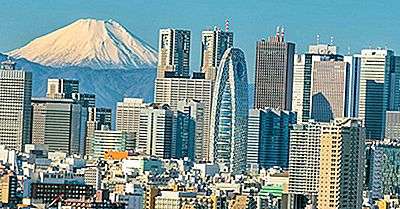
Located in Shimbashi, Tokyo, Japan, the Nakagin capsule tower, designed by Kisho Kurokawa, is one of the best examples of metabolism. The structure includes 140 units of prefabricated cell capsules which are bolted individually to a single concrete well. However, the structure looks more like stacks of front-loading washing machines. Currently, the structure still exists although only about 30 units remain in service while the others have been abandoned for a long time. Other examples include the Yamanashi press center and broadcaster, Shizuoka Press and Broadcasting Terrace and Hillside Terrace. There are many futuristic conceptions of metabolism that have never been constructed.
Evolution and disappearance
According to some rumors, part of the work at the Kenzo Tange Lab was largely influenced by Louis Khan, an American architecture. It is believed that Khan, along with his associates, designed modular towers stacked between 1957 and 1961 at the University of Pennsylvania for the Richards Medical Research Lab. Since then, the modern geometric idea of using space has become a model. Metabolism was itself interconnected and organic, and, unfortunately, the International Exposition held in Osaka, Japan, as part of 1970 was the last attempt by the architects of the metabolic movement resulting from the disappearance of the metabolic movement. Post-1970, individual architects of the metabolist movement opted for an independent career and became more independent.
Located in the North Atlantic, Iceland is home to some of the largest glaciers in Europe. Besides ice, the country is also famous for its volcanic activities. Glaciers and volcanoes have earned Iceland the nickname “land of fire and ice”. Iceland is sandwiched between Norway and Greenland. The country experiences long days in summer with almost 24 hours of sunshine. The Gullfoss waterfall on the Hvita river is one of Iceland’s main attractions. Other scenic spots include Thingvellir Park, Latrabjarg Cliffs, Myvatn Lake, and Dettifoss Waterfalls.
India
India is a country in South Asia with the second largest population in the world. The Indian capital, New Delhi, hosts more than 9 million people out of the more than 1.2 billion people throughout the country. India is the second most populous country in the world. The name “India” was derived from a Pakistani river, the Indus River. The country is known for its many festivals, including Diwali, Durga Puja and Rakshabandhan. The country celebrates and adheres to festivals of all religions in India. Tourists from all over the world travel to India to experience these celebrations. The inexplicable love of spices and jewelry among Indians places India on the world map. Bollywood, the Indian film industry, is one of the largest film industries in the world.
Indonesia
If you like good coffee, Indonesia is definitely a country to visit. Java coffee was born in Indonesia after being named after the island of Java. Sumatra coffee and Luwak coffee are the most famous types of coffee from Indonesia. Another Indonesian island with an iconic name is Komodo Island, home to the Komodo Dragon. Indonesia is also famous for its varieties of food from different ethnicities. The country has more than 250 million people from different ethnicities. Some of the well-known Indonesian specialties include nasi goring (fried rice), satay (chicken) and rendang (spicy beef).
Iran
Despite the wars and armed conflicts in Iran, the country holds 10% of the world’s oil reserves. Iran pumps nearly X million barrels of oil a day. After petroleum, the Irish carpet is the second Iranian export product. Iranian carpets are known worldwide for their unique embroidery. Iran is an Islamic state and Islamic culture is widely respected. Practices such as wearing the hijab are strictly followed. Incredibly, Iran has the highest nose-to-nose rate in the world, with Iranian women often seeking cosmetic surgery. The Iranians’ pursuit of “perfect Iranians” is believed to be due to the hijab dress code, which places more emphasis on the face.
Iraq
It is believed that this Middle Eastern country is home to the Biblical Garden of Eden. It is also said that Abraham was from Iraq since the Bible says he was from Ur, which is in southern Iraq. Arabs make up 80% of the Iraqi population, followed by Kurds, Turkmens, Chaldeans and Assyrians. Despite the brutality of the war in Iraq, the country is trying to rebuild itself from constant terrorist attacks. The country still remains rich in its glorious history. Among the concepts invented in Iraq since 100 years ago, let us quote algebra, pediatrics and the famous story “Alibaba and the forty thieves”.
Ireland
Also known as Emerald, Ireland is ranked second in the world for beer consumption. Ireland has famous breweries like Guinness, Harp Lager and Smithwick’s. Whiskey was also invented in Ireland by Irish monks in the 12th century. The country is also known for the celebration of Saint Patrick and the fact that Ireland is a snake-free island. Ireland has world class golf destinations such as the Royal Portrush Golf Club. Other common sports in Ireland are rugby, horse racing and football. The Galway races, held annually, are a popular horse race in the country.
Israel
Israel is considered by Christians to be the Biblical Holy Land. The Israeli city of Jerusalem has many sacred sites for Muslims, Jews and Christians. These sites include the Dome of the Rock, the Al-Aqsa Mosque and the Temple Mount. This Middle Eastern country has experienced many conflicts with its Arab neighbors and emerged victorious from almost all of these wars. Famous attractions in Israel include the Dead Sea, Yad Vashem, the Sea of Galilee, Eilat and the Bahai Gardens, among others.
Italy
Italy is a European country famous for its culture, art and sumptuous food. Pizza, a fast food popular in the world, is common Italian cuisine. Pizza was invented in the Italian city of Naples. In the fashion industry, Italy is known for producing big brands such as Versace, Dolce & Gabbana, Armani and Gucci. One of the biggest fashion events, Fashion Week is held every year in Milan. Italy also produces wine and olive oil. The city of Rome is a famous tourist destination due to the richness of its historic sites.
Ivory Coast
Located in West Africa, Côte d’Ivoire is also called Côte d’Ivoire in French. The name Côte d’Ivoire was adopted from the country’s ivory trade which ended in the 12th century. The country is the world’s leading producer of cocoa. Côte d’Ivoire is also home to the largest church in the world, the Notre-Dame de la Paix basilica, located in Yamoussoukro. Beautiful national parks such as Tai and Camoe National Parks are spectacular sites to visit in Côte d’Ivoire. The emblematic mountain of Nimba is also an emblematic site to see. The country has two capitals, Yamoussoukro is the political capital and Abidjan serves as the economic capital.