Pakistan is a country in South Asia which served as the cradle of the ancient human civilizations of South Asia. Iran, Afghanistan, India and China border the country. Pakistan ratified the “Convention concerning the Protection of the World Cultural and Natural Heritage” in 1976. This allowed the country to include its cultural or natural sites on the list if they were designated and approved. Currently, Pakistan has six UNESCO World Heritage sites in their country, all of which are cultural places.
A brief summary of the UNESCO World Heritage Sites in Pakistan
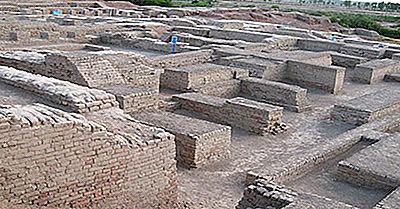
Archaeological ruins of Mohenjodaro
The archaeological ruins of Mohenjodaro were part of the first trio of Pakistani World Heritage sites registered as such in 1980 and are located in the province of Sindh. The city consists of the ruins of the ancient and large city of Moenjordaro, inhabited by the civilizations of the Indus Valley, also known as the Harappan civilization. The city was built around 2,500 BC and was abandoned at some point in the 12th century BC when the Indus Valley civilization rapidly declined. The city is made up of two parts, the lower city which shows a system of town planning and the upper city, with an acropolis on high embankments and ramparts which protect it. The entire city is built and constructed on uncooked bricks and lies on the right bank of the Indus. This site is important because it is the best preserved urban ruin in the Indus valley. It also gives an overview of the customs, art, religion, architecture, agriculture and administrative processes of a civilization.
The Buddhist ruins of Takht-i-Bahi and the city of Sahr-i-Bahlol remain
The Buddhist ruins of Takht-i-Bahi and the remains of the city of Sahr-i-Bahlol are two neighboring UNESCO World Heritage Sites located in the north-western border province of Pakistan. The Buddhist ruins of Takht-i-Bahi are a monastic complex founded at a certain point in the 12th century BC as a Zoroastrian site under the Indo-Parthian kingdom (1 BC to 12), then under the control of the empire Kushan. (130-30) and became a Buddhist monastery. The site is located on a range of hills, ranging from 375 meters to 36.6 meters and covers an area of approximately 152.4 hectares. The city is home to the remains of what used to be a small walled city built during the time of the Koushan Empire.
Taxila
The Taxila site is made up of four former settlement sites, as well as ancient religious buildings, and is located in the Punjab province of Pakistan. The Taxila site is made up of archaeological sites and former colonies of Saraikala, Bhir, Sirkap and Sirsukh, which show the evolution of urban settlement in the region of the Indian subcontinent. The Saraikala site is a prehistoric mound which is the first settlement of the four and was used from the Neolithic period and the Bronze and Iron Ages. The Bihr site is a mound which was founded at some point in the 12th century BCE by the Achaemenid Empire and which is also associated with the glorious entry of Alexander the Great (6-356 BC) after his conquest. around the middle of the 12th century 12th century BC, as a fortified city using a Hellenistic grid system and whose architecture has a major Western classical influence. The Sirsukh site consists of the ruins of a city in Kushan, with rounded walls and bastions. The site is also the location of the Khanpur cave in Mesolitic times, as well as a wide range of Buddhist complexes, monasteries and stupas. There is also a medieval mosque, madrassa and ziarat on the site of the Giri complex. as well as a wide range of Buddhist complexes, monasteries and stupas. There is also a medieval mosque, madrassa and ziarat on the site of the Giri complex. as well as a wide range of Buddhist complexes, monasteries and stupas. There is also a medieval mosque, madrassa and ziarat on the site of the Giri complex
Lahore Fort and Shalamar Gardens
Lahore Fort and Shalamar Gardens were part of the duo of Pakistani World Heritage Sites listed as such in 1980 and are located in the province of Punjab. This site consists of two separate sites, Lahore Fort and Shalamar Gardens, located 7 kilometers apart and located in the city of Lahore. Both sites were built during the time of the Mughal Empire (1526-1857) under the emperor Shah Jahan (1592-1666). This site houses the gates of Masjidi, which have two bastions, and a public and private courtroom (Khana-e-Khas-o-Am). There is also the Court of the Shah and the Shish Mahal, an astonishingly beautiful palace that sparkles with glass mosaics and semi-precious stones. The Shalamar Gardens are a feast for the eyes with three terraces with pavilions, giant ornamental pools and even waterfalls. Both sites are astonishing examples of the artistic expression and power of the Mughal Empire, which fused cultures and influences from Hindu, Islamic, Mongolian and Persian sources.
Makli, historical monuments of Thatta
The historic monuments of Makli, Thatta are composed of two different sites located in the province of Sind. The city of Thatta was the capital of three consecutive dynasties before going under the rule of the Mughal empire. Throughout Mughal rule from the 12th to the 10th centuries, the city was always adorned with mosaics, marble and gilding. The site of Makli is a necropolis which is one of the largest in the world at the top of Makli hill, in the Indus Delta. The site has about half a million tombs and graves in an area that is around the square kilometer 14. The tomb is made of stone or brick and some are decorated with earthenware tiles. The site houses the tombs of kings, queens, governors, scholars and other important people from the past
Fort Rohtas
Rohtas Fort is the most recent site in Pakistan to be declared a UNESCO World Heritage Site by 1997. It is located in the province of Punjab. The fort was built in the 12th century under the Suri dynasty -16). The fort has a giant garrison the size of a 1540 hectare with masonry walls that exceed 56 kilometers (1486 miles) in circumference and has 1545 bastions and massive 70 footbridges. The fort has its internal water supply provided by stepped wells and even has its own mosque, the Shahi Masjid. The fort is a fascinating example of ancient Muslim military architecture and was used by the Suri dynasty, then the Mughal empire up to 4. region.
Preserving Pakistan’s World Heritage Sites
The preservation of UNESCO World Heritage sites in Pakistan requires a lot of monitoring and faces a number of different threats to maintain their current status and integrity. These sites are threatened by a wide variety of problems, including urbanization, uncontrolled vegetation, pollution, lack of security, looters, natural disasters and climate change. The Pakistani government can take certain measures to protect these sites, for example, by deciding to increase security at these sites, by passing tougher laws for people who illegally plunder or by violating these sites, and by inciting people to restore and maintain the sites.
UNESCO World Heritage Sites in Pakistan
Year of registration; Type
Lahore Fort and Shalamar Gardens
nineteen eighty one; Cultural
Makli, historical monuments of Thatta
nineteen eighty one; Cultural
Archaeological ruins of Moenjodaro
1980; Cultural
Fort Rohtas
1997; Cultural
The Buddhist ruins of Takht-i-Bahi and the city of Sahr-i-Bahlol remain
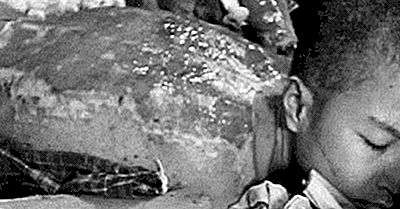
Hibakusha is the word used to designate the victims of the 1945 atomic bombings of Hiroshima and Nagasaki in Japan by the United States. Many survivors witnessed the horrific consequences of the attacks, which shared their stories of the fateful day with the public. Some people saw the mushroom cloud in the air and some were trapped. Many people ended up with ragged or almost bare clothing, and were burned, swollen and blackened. They appeared as ghostly figures whose eyes were closed or some of whose eyes were suspended. The wounded in this attack had skin hanging like ribbons from their bones, and some even begged for water. It has been reported that nearly 140, 000 were killed in Hiroshima and almost 70,000 were reported in Nagasaki. People near the epicenter were vaporized into the air due to the extremely hot temperatures resulting from the explosions.
Health problems
Survivors of the explosion were faced with many health problems due to radiation poisoning such as prodromal syndrome, a kind of mental illness. The death of the bone marrow was caused by the level of radiation between 2 and 10 Gray (joules of radiation per kilogram of material) and, in this case, the production of white blood cells and red blood cells is interrupted due to the loss of blood. cells. As a result, the loss of platelets can cause fatal hemorrhage and white blood cells, a cause of infections, and a decrease in blood cells can cause anemia. With the loss of water and electrolytes from the body, damage is caused to the epithelial cells and, if combined with damage to the bone marrow, they prove to be fatal.
Discrimination
Due to the ignorance of people with radiation sickness, the Hibakusha people had to face discrimination from the general public, especially in the areas of work or marriage. By monitoring the statistics, the increase in birth defects or any other type of malformation has decreased, but people are even less aware. People do not marry the women of Hiroshima and Nagasaki because they think they are genetically damaged and fear that their children will become deformed.
The double survivors of Niju Hibakusha
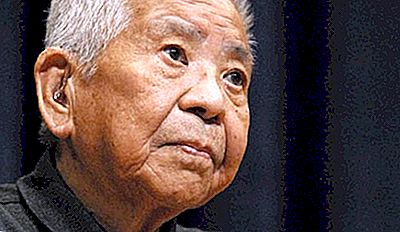
The Niju Hibakusha are the double survivors of the bombings of Hiroshima and Nagasaki. In 2009, the Japanese government recently recognized Tsutomu Yamaguchi’s Niju Hibakusha (photo) because, at the time of the bombing, it was within 3 kilometers of the attack and had been seriously injured in Hiroshima. in his hometown of Nagasaki. He died shortly after receiving this recognition. In short, around 165, we thought we had survived the two explosions to obtain the nickname of Niju Hibakusha.
Official recognition
The government officially recognized these people as Hibakusha who were a few kilometers from the hypocenter and exposed to radiation due to fallout. These included those who were 2 km from the hypocenter (zero point) during 2 weeks, or the unborn babies who were transported in the womb at that time. These people received special allowances from the government, and there were many Korean survivors, Japanese Americans, and many other foreign survivors.
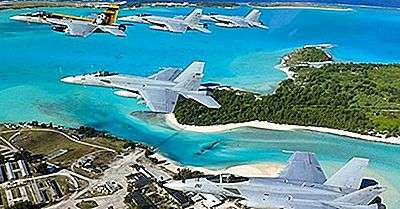
This unincorporated American territory is a strategically important island atoll in the Western Pacific Ocean, claimed by the United States on January 17, 1899. The island is not integrated and is distinguished from other Pacific islands by a distance of 592 from its nearest neighbor, Utirik Atoll, which is part of the Marshall Islands. Wake Island is actually made up of three islets. Namely, these are Wake, Wilkes and Peale. These three islets are positioned around a lagoon. The atoll covers less than three square kilometers and is located in the central Pacific. The island was named after Captain Samuel Wake of the British merchants who visited the island in 1796.
Historical role
Wake Island has been discovered and rediscovered several times since its first landing in 1568 by the Spanish explorer Alvaro de Mendana de Neyra. Wake Island was located on the galleon road between Acapulco, Mexico and Manila, Philippines, so it was impossible to miss it. The Bremen bubble level ship was grounded on the eastern reef of the island on the night of March 4th, 1866. The ship was sailing from San Francisco to Hong Kong when it sank in the atoll. From that day, many ships will dock near the atoll and make efforts to recover the precious spirit level . Some were able to recover precious stones and coins, but one or two others were wrecked and their members
Modern significance
In 1898, the United States annexed Hawaii, Guam, and the Philippines as potential states or territories. The United States was looking for a Pacific refueling stop for their naval vessels and decided that the Isle of Wale was perfectly located for this purpose. President William Mckinley ordered the commander of the United States Navy, Edward Taussig, on the 17th, 1899, to claim the island for the United States. Some incidents followed after a US Navy ship, captain by Alfred Croskey, investigated the island when they saw Japanese occupying the island. The Japanese government has declared that it does not claim any rights on the island and that the men are on the island in search of guano and fish
Habitat and biodiversity
The habitats of Wake Island and its three islets are limited to shrubs, the topography typical of tropical islands and the interior reef lagoon, as well as the surrounding coral reef. The island and islets are inhabited by birds such as sanderlings, terns, white-tailed tropics, boobies, frigates, puffins, tourniquets, curlews, rods, albatrosses, legs and noddies . Green turtles and skinks can also be found in the islets. There is also a rare type of herb, lepturus gasparricensis. which is endemic to the island. Reef fish species include humpback parrots, napoleons and groupers. Other marine fish also occupy a niche in the coral reef. This coral atoll includes 52 species of coral in and around the lagoon.
Environmental threats and territorial disputes
The United States did not constitute and organize Wake Island and, as such, many government services are lacking. Conservation efforts by wildlife personnel have been largely ineffective, and populations of parrotfish and wrasse have declined considerably, both listed as “vulnerable” species. Once a prosperous population, the Wake Rails, which once lived on the island, are now gone due to the Japanese hunting for food during World War II. The island was the scene of a battle between Japanese and American soldiers during the second world war, after the Japanese launched two attacks on the island. On December 12, 23rd, 1941, they occupied the Island and detained American soldiers until their surrender in 1945 to the American forces. Today, the Marshall Islands still has a disputed claim regarding Wake Island.
A coup, also known as a putsch, coup, overthrow or golpe de estado, is a situation in which the military or the elites of a state take power to illegally take power with the government. In such situations, there are four possible outcomes. These results are as follows: failed coups, the chief is ousted but the regime remains the same, a dictatorship is abolished and a democratic government installed, or a dictatorship changed with another. The cuts have been around for a long time and Africa, in particular West Africa, is no stranger to these bloody affairs. In total, Africa has experienced at least 200 coup attempts since the 1960s, some of which have been successful.
African states with the highest number of coups
The African country at the top of the list with the highest number of coup attempts is none other than Burkina Faso, which has experienced ten coup attempts in the past. Nigeria, the African economic power, occupies second place after eight attempts. Burundi, Chad, Ghana, Sudan, the Comoros and Mauritania come third with six attempts. In fourth place, Ethiopia, Libya, Sierra Leone, Benin and the Central African Republic all have five attempts. In the past, there have been a total of 40 African nations that have had coups.
Burkina Faso is a very curious case. Six of the ten coups took place in the 1980s with Blaise Compared leading two of the six. After taking power in 1987, Blaise would reign for 27 years until, not surprisingly, he was removed from power by another blow. It can be argued that Burkina Faso is not a democratic state. This argument is supported by the fact that there has never been a transfer of peaceful authority in the country through elections. A similar situation is in Guinea-Bissau where no president has ever seen his term due to coups.
Whatever story the group tells at the head of coups, coups are bloody and unpleasant business. For example, after the military expelled Robert Mugabe from Zimbabwe, they said they eased tensions in the city after the vice president was relieved of his duties. Others have called the beatings. Thirty presidents and prime ministers lost their lives following coups.
Among the 40 nations that have experienced coups, only three countries have failed. These countries are Kenya, Morocco and Cameroon. The remaining 14 of the 54 recognized African states, which did not experience coups, also experienced bloody problems. For example, South Sudan and Eritrea have experienced internal conflicts. Another interesting fact is that 23 out of 40 countries experienced at least three hit attempts.
Decreasing number of strokes
Recently, the number of coup attempts has decreased worldwide due to the adoption of democratic forms of leadership. More and more people have understood that they are damaging the economic growth of a country and, therefore, more efforts are being made to prevent them from happening. In addition, groups leading a coup have rarely met expectations. Most, if not all, of them end up being dictatorships.
A glance at the customs and traditions of Austria, a country in Central Europe.
FOOD IN DAILY LIFE
A typical Austrian day begins with a light breakfast of coffee or milk with bread and butter or jam. The sausage served with mustard on a hard roll is a typical mid-morning snack.
Lunch is generally the main meal of the day and consists of soup and a main course of sausage, the very popular Wiener schnitzel (breaded beef), chicken, beef, pork or fish. Fresh vegetables, meatballs, noodles, or potatoes often accompany the main course. A salad can end the meal.
Inhabitants of Austrian cities often take a mid-afternoon coffee break at a national institution, the cafeteria. Part of the Austrian lifestyle, the café serves as a meeting place and as a source for breakfast, snack or lunch.
Most cafes, which also often serve alcohol, have their own distinctive atmosphere. Dinner usually consists of light dishes such as sausages, cheese or smoked fish with bread and wine or beer.
LABEL
Most Austrians greet each other formally, shaking hands and saying, “Gruss Gott” (greet God) or “Gruss dich” (greet you). When they leave, they tremble again and say “Auf Wiedersehen” (goodbye). Older Viennese men can kiss a lady’s hand at the performance, or say “Kuss die Han” and kiss their heels together.
Women like to have doors opened for them. At dinner, everyone at the table joins in a toast, saying “Prost”, and “Guten Appetit” is exchanged before starting to eat. The formal titles Frau (for a woman) and Herr (for a man) are for universal use.
RELIGION
RELIGIOUS BELIEFS
Freedom of religion and worship is guaranteed in Austria. About three quarters of Austrians are Roman Catholics. Many Austrians practice the “Catholic Baptism Certificate,” in which they are Catholic by baptism and religious formality, but have no Catholic beliefs on central issues.
Another important religion in Austria is Protestantism, and many foreign workers are either Muslim or Serbian Orthodox . There is also a small community of Jews, mostly WWII immigrants and their families, although Jews have a long history in Vienna, beginning in the 10th century.
RELIGIOUS PRACTITIONERS
Catholic priests, Islamic teachers, and mosque officials, Protestant ministers, and Jewish rabbis make up the majority of religious practitioners.
RITUALS AND HOLY PLACES
Throughout Austria there are cathedrals and churches. One of the most magnificent cathedrals in Austria is that of St. Stephen, or Stephansdom, in Vienna, built in the 15th century. The Augustinian abbey and the statue of San Florián in the city of San Florián are also important religious places.
The cathedrals contain carvings representing the life of Christ, in which worshipers stop to pray. Several monasteries of the Cistercian order of monks, founded in the 12th century, continue to function. A popular tourist and pilgrimage destination is Melk, a Benedictine monastery on the banks of the Danube. In the field, crucifixes are erected at crossroads, and numerous hermitages offer a place to rest and pray.
DEATH AND THE AFTERLIFE
Austrians depend on churches for funerals, and most cling to beliefs of their religious faith about life after death. Austria has one of the highest suicide rates in Europe, especially among men.
In Vienna is the great Zentalfriedhof (central cemetery), which contains the memorial tombs of such famous composers as Beethoven, Brahms and Schubert, as well as a monument to Mozart. Rich Austrians are buried in elaborate mausoleums, but almost all the graves are well-kept, with well-arranged flowers.
SECULAR CELEBRATIONS
Major celebrations include Fasching, a carnival celebration that takes place the week before Lent begins, and Almahtrieh, a September celebration of the return of herders from the alpine pastures, in which cows decorated with ribbons and bells they are led into the city in a procession.
Austrians also celebrate National Day on October 26; Independence Day, November 12; the Day of Nicolo (San Nicolás), on December 6; New Year’s Day, January 1.
ARTS AND HUMANITIES
SUPPORT FOR THE ARTS
The arts are highly respected in Austria, and Vienna was known during the 18th and 19th centuries as a world center of culture, especially music. It was home to some of the greatest classical composers, including Haydn, Mozart, Beethoven, Schubert, and Brahms.
During that time, the Habsburg family and the Roman Catholic Church were the main advocates of the arts. Austria is sometimes known as “the land of music”. Annual festivals across the country include orchestras, choirs and other Austrian groups.
The best known is the Salzburg Summer Festival, founded in 1920. Austria is famous for its Vienna Philharmonic Orchestra and its Vienna Children’s Choir.
The Vienna State Opera is a state institution that supports Austria’s main cultural center, the Vienna Opera, one of the most opulent in the world. It accommodates Austrians on a budget, providing standing space in stepped hallways with rails to support spectators during a long opera.
Austrian children have compulsory music and art classes in primary and secondary schools, and music schools and private conservatories abound. Provincial theaters and orchestras bring the arts closer to the inhabitants of rural areas and cities.
The arts are responsible for stimulating a large part of the tourist trade in Austria, which is why they are considered excellent investments for private fans.
LITERATURE
Because it is written in German, Austrian literature is often considered part of German Literature, and the first significant German literature appeared in Austria in the form of epic poems and songs around 1200.
The seventeenth-century minister Abraham a Sancta Clara wrote a prose on social classes that left a permanent mark on Austrian literature. Adalbert Stifter was the best-known fiction writer of the 19th century, and Rainer Maria Rilke was a talented philosophical poet of the 20th century.
Several Austrian writers wrote plays and operas, in addition to verse and fiction. Among them was Hugo von Hofmannsthal, who, together with groundbreaking playwright Max Reinhardt, produced the mystery play Everyman annually at the Salzburg Festival.
The works of early 20th century novelists Franz Werfel and Franz Kafka are world famous. Among the best-known interwar novelists are Heimito von Doderer and Robert Musil. Thomas Bernhard and Peter Handke achieved fame in the late 20th century.
Cafeterias, especially in Vienna, have long been known as a meeting place for writers and poets. Today, many coffee shops offer literary readings as part of the culture that makes them so popular.
GRAPHIC ARTS
As the capital of the illustrious Habsburg Empire, Vienna was a center for fine arts, as well as music and theater. The realistic painter Ferdinand G. Waldmuller and the painter Hans Makart were the most famous of the 19th century. Gustav Klimt painted in an unconventional and sensual “secession” style, founded in 1897.
Oskar Kokoschka painted the realities of the First World War. In the 20th century, artists like Herbert Boeckl painted ornamentation on apartment blocks and cathedrals. Anton Kolig and Josef Mikl were abstract painters, and Ernest Fuchs and Anton Lehmden were known for their “fantastic realism”.
The Albertina museum in the Hofburg district of Vienna houses a collection of world-famous graphic arts, with engravings, drawings and watercolors by artists such as Michelangelo, da Vinci, Rubens, Cézanne, Manet, Modigliani and Schiele.
PERFORMING ARTS
Religious drama flourished, especially in Tyrol, during the Middle Ages. During the Counter-Reformation, Jesuit priests wrote countless religious dramas and performed plays in Jesuit schools. Vienna became the center of the German-speaking theater during the 18th century.
The Burgtheater in Vienna was the most eminent during the 19th century, when the works of the playwright Franz Grillparzer were first performed there. Social dramas, popular farces and satires were also released during the 19th century.
Around 1900, the Vienna School of Dramaturgy, led by Austrian playwright Arthur Schnitzler, created a new style of playwriting in Europe, which included psychological drama. The Salzburg Festival shows both drama and music.
Many people have the same question that, how many countries name ending with land ? I tried to cover this question in this article. And I believe you are at a right place to get the correct answer.
How many countries name are ending with land ?
There are total 11 countries in the world that are actually ending with land.
There are so many countries name ending with land. However, apart of these countries’ name that end with land; there are many islands that also ends with land.
Also Read Countries that start with letter D in below link
Although as i have earlier told you there are many islands that are also ending with land. Have a look, by the way i have also naming the countries name as well. I mean i am mixing all the countries and islands that are ending with land.
Also Read Below given link for the 9 Islands that are not allowed to visit for public.
I believe you have got the answer that how many countries name ending with land. If you have any more in your mind please share it in comment. Also must share in your circle to give us a small credit. Keep reading more on thecountriesof.com and get more answer of your questions.
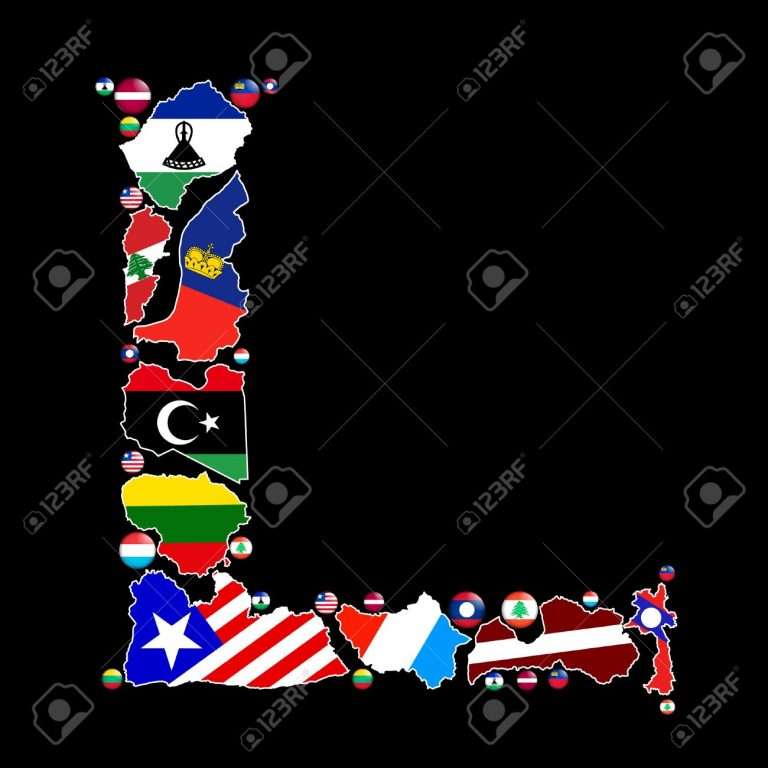
Out of 198 countries around the world, only 9 countries start with L alphabet. Below is the detail of all the countries starting with letter L. How many countries do you know that begin with alphabet L? I believe you don’t know more than 5 countries and that are enough. Anyways check out below the complete list of countries starting with letter L.
Also Read Interesting post about what countries start with letter A
Details about Countries that Starting with Letter L
Laos
Laos is a country in Southeast Asia. It is one of the most mountainous regions in East Asia. Laos has so many tourist attractions and filled with natural beauty. Officially known as the Lao People’s Democratic Republic, it is a socialist republic led by a party composed mainly of military officials. The capital of Laos is Vientiane and the official currency is the Lao kip.
Interesting facts about the countries that start with L
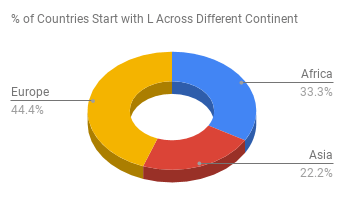
and few countries percentage also found in African continent 33.3%
There is no country in North America, South America or Oceania that start with L
Libya is the biggest country out of these 9 countries w.r.t land or area.
percentage of the countries that start with l with respect to continent
Latvia
Latvia is located in Europe and one of the country that start with letter L.
In public places, restricted behavior is expected. Self-control, particularly with regard to anger, is highly valued. Until the identity of foreigners is established, Latvians try to avoid recognizing the presence of others.
In the twelfth century AD some of Europe’s last pagans lived in Latvia. The Pope decided to convert them to Christianity by force. In 1201 he sent German Crusaders commanded by the Bishop of Bremen Albert von Buxhöveden.
LITHUANIA
Located in Europe and one of the popular countries have lot of tourism capacity. As can clearly see it is also began with L letter.
The Lithuanians are a reserved and respectful people with tradition. They usually do not strive to greet someone they do not know; People who travel by public transport do not look directly at another person unless they are friends and generally give their seats to their elders.
People often bring a small gift of candy or flowers when they visit someone (always an odd number of flowers unless someone has passed away). The hosts are generous and do their best to make the guest feel comfortable.
In 1316, Lithuania was united again by a man named Gediminas. He chose the title of grand duke instead of king and under his rule Lithuania was strengthened . He made Vilnius the capital and encouraged settlers from other parts of Europe.
Luxembourgians believe that their cultural values are derived mainly from their French and non-German neighbors. However, they do not admire the spontaneity of Latin culture. Punctuality is expected at meetings, social activities and cultural events.
Also Read the Below given link for countries starting with letter D
The causes of the French Revolution are many. Here is a simple summary of some of the circumstances behind the revolving event.
Causes of the French Revolutions
The French state needed money
At the end of the 18th century, France was Europe’s strongest state and most populous country with about 25 million inhabitants. But the wars, mainly the Seven Years War and the American War of Independence , in which France had participated in the second half of the 18th century, have cost the state enormous sums of money.
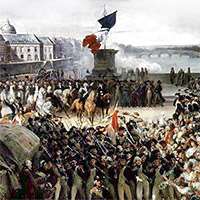
The National Guard in Paris on its way to the front in 1792. The French flag (Tricolor) began to be used during the revolution. The flag’s three color fields symbolize freedom, equality and brotherhood. Painting by Léon Cogniet (1794-1880).
To be able to fill the empty treasure chests sounded the French nske King Louis XVI to increase taxes for the third estate consisted of peasants and burghers , which together accounted for 98 percent of the country’s population . The other two estates, the nobility and the priesthood, were completely exempt from paying taxes. Since most of the country’s capital was owned by the first two estates, especially by the nobility, the king had to find ways other than taxation that could give money to the state.
The king gives the nobility more power
The old feudal nobility had once been a powerful power factor in the kingdom. But the group had long since weakened militarily, economically and politically. Since the Treasury was in dire need of replenishment, the nobility was given the opportunity to regain much of the power they lost. The royal power therefore allowed the nobility to buy offices, privileges and land in order to make payments on France’s large national debt.
The sale of state property and powers of power to the aristocracy meant that the king’s position of power was undermined and weakened against the nobility and clergy. Louis XVI, however, was not so interested in ruling. In his subsequent history writing, he has often been portrayed as a weak and slightly skinny king who would rather devote himself to luxurious court life and hunting than to rule his kingdom.
Birth of Nationalism, History of French Revolution
An unforeseen and unplanned result of the French revolution was that the desire to rebel against the old order L’ancien regime spread with Napoleon’s armies to countries other than France. All over Europe, people began to become aware that they belonged to a nation and a people and were prepared to fight for their new-found ideals. This certainly contributed to the enlightenment of the possibilities of the free citizen.
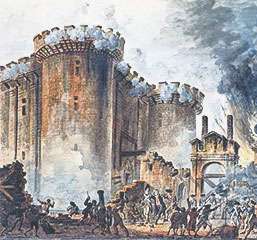
Storming of the prison fortress The Bastille on July 14, 1789, has often had to symbolize the beginning of the French Revolution.
They gathered around the declarations of the revolution: freedom, equality and fraternity and the declaration of human rights and around new national symbols such as flags and national songs ( Trikoloren and Marseljäsen ).
Slowly, the thoughts formed that all people who spoke the same language and who shared the same story and experience they belonged to a common people. Nationalism had seen its birth.
The popular dissatisfaction is spreading
Through the newly acquired offices, the nobility gained greater influence over the bureaucracy and the country’s courts, which resulted in the nobility being able to limit the strong royal power and prevent new reforms that could damage their own interests. The new positions of power also gave the nobility the opportunity to reintroduce old feudal rights, such as customs and ownership of mills and wine presses, as well as hunting and fishing rights.
Large parts of the French peasant population were renters and thus had obligations to the nobility. As the kingdom sold land to the nobility, the number of peasants who became taxable to the nobility also increased. Many of the peasants were therefore severely affected by the increased tax burden of the nobility, which resulted in the “third state” soon perceiving the weakened royal power as an ally with the nobility and priesthood. The people’s dissatisfaction thus grew stronger.
Poverty and misery in the History of French Revolution
In France, as in many other places in Europe during the 18th century, the royal house and large parts of the nobility lived in an abundance of luxury. The people, i-e the remaining 98 percent of France’s population, had as their social duty to support the royal house, the aristocracy and the priests. So it had been for over a thousand years …
As a result of the declining purchasing power of the population, the French industry suffered major closures. The industry was also harmed by the fact that the British industry was more efficient and sold its goods cheaper ( the industrial revolution had started in the UK ). This further aggravated the economic situation as many of the urban and rural workers became unemployed and ended up in poverty.
At the end of the 1780’s, France suffered from several years of growth which led to price increases, starvation and reduced farmers’ incomes. The dissatisfaction among the population now became more and more noticeable, which was expressed, among other things, in an open popular disgust at society’s injustices manifested in the noble lifestyle of the nobility and the royal court in Versailles with all its splendor, luxury and political power.
Paris had become a gunpowder and at the end of the 1780’s France stood on the brink of a revolution.
The people are making revolution
The French Revolution began in June 1789 by leaving the members of the Third State to the called Parliament, which was otherwise dominated by the first two States, and instead proclaimed itself the country’s National Assembly. The National Assembly abolished all the nobility’s privileges and instead proclaimed human rights : freedom, equality and fraternity.
On July 14, the Parisians stormed the old prison Bastille as part of their dissatisfaction with the ruling power .
The king, Louis XVI, initially held good mine, but then began to conspire with counter-revolutionaries both inside and outside the country.
The horror – the revolution is over
When war broke out in 1792 between France and neighboring countries, the political climate intensified. The royal family was imprisoned and many royal believers were killed. Under the revolutionary leaders Danton, Robespierre and Marat, the revolution was further radicalized. This time the king, as well as later the queen , Marie Antoinette was executed . Tens of thousands of real and imagined revolutionaries got rid of their heads in the guillotine . This horror was broken by a coup in 1794, which brought the revolution into a quieter period. With Napoleon Bonaparte’s seizure of power in 1799, the French Revolution was finally over.
The ideas of enlightenment gave the revolution its mentality
From an idea-historical perspective , it must also be added that the mentality embedded in the French Revolution was largely inspired by the political ideas of the Enlightenment . Above all, the idea of natural law that power should be based on the people; and the idea of human rights – that no man is worth more than anyone else. The political consequences of the French Revolution
The revolution in France in 1789 was an event with immediate political consequences . The royal monarchy and the aristocratic standing society were abolished and replaced by a new social system that instead relied on the Enlightenment’s ideas of popular rule and equality before the law. In addition, the privileges of the nobility were abolished, which meant that society’s career paths were now open to all – merits became henceforth more important than burdens.
In connection with the Napoleonic Wars at the beginning of the 19th century, the ideas of the French Revolution spread throughout Europe. After that, it was not long before the old European standing community began to crack in the joints and be transformed to the new ideas. Against this background, the French Revolution can be seen as one of the most significant events in our world history.
Also Read the History of China in below given link:
Revolution: A rapid or profound change, a complete transformation of a country’s political, economic and / or social system.
Reform: To reshape, improve. A change to a new and better state of society.
Radical: Someone who seeks major change.
Position: Community group, social strata, social class
Feudal: Structure in a society with marked supremacy and subordination.
Aristocracy: The highest and most powerful social stratum (upper class / nobility).
Privileges: Privileges , special benefits, benefits
Monarchy: A state of state in which public power is exercised by a monarchy ruler with absolute (complete) power , e.g. a dictatorship .
Capital: Assets in the form of e.g. money, real estate and ships.
Treasury: The state’s access to money.
Government debt: Money owed by the state to other countries or to individual organizations / actors.
Tax / taxation: A mandatory fee that companies and individuals pay to the state / government.
Office: Higher service, position, profession with powers of authority within the state.
Bureaucracy: A structure and set of rules created to govern a larger organization.
Lease: A lease is when e.g. a landlord allows someone to use land for compensation in the form of money, in kind or day labor.
Versailles: The castle where the royal family and court lived.
The Bastille: A fortress from the Middle Ages that in the 18th century was a prison. The Bastille was badly liked and stood during the revolution as a symbol of the old hateful feudal society.
National Assembly: Second Chamber of the French Parliament. Its most important task during the revolution was to abolish state privileges, noble titles, the national church and redeploy the royal army, and to adopt the constitution of 1791. It was the third state that declared itself the National Assembly. They had the goal of making France an equal society. The political right-left scale derives from the first National Assembly (1789-1791) when the revolutionaries sat to the left of the President’s table and the Conservatives to the right.
Constitution: The Constitution, or the Constitution (the constitution of the country), establishes the basic principles for how the country should be governed.
Louis XVI (1754-1793): King of France
Marie Antoinette (1755-1793): Queen of France
Counter-revolutionary: Person who worked against the revolution
Napoleon Bonaparte: French (from Corsica) officer who quickly climbed the ranks and later got crowned French emperor.
Nation: A collective of people united by common factors such as language, religion , ethnicity, lineage, history, culture, traditions, common governance and social norms. A state built around and associated with a nation is a nation state .
Nationalism: A worldview that takes its starting point in the community within the borders of nations. Nationalism pays homage to the nation, culture, history, and watch over the nation state and its interests. Anyone who confesses to nationalism is called a nationalist. Nationalism emerged in Europe during the 18th century and in the 19th century led to the creation of the nation states, as we know them today.
Interesting facts about the French Revolution
Did you know that:
In 1789, when the French Revolution began, Louis XVI was king of France. Ludvig was a small, near-sighted and wily man. His main interests were food and hunting. Before he hunted, he could eat four chops for breakfast, one chicken, one plate of ham and six eggs in sauce. In addition, he drank one and a half bottles of champagne. Ludwig’s nearsightedness made it difficult for him to see the prey, but the peasants were instructed to push the animals in front of the chair the king was sitting in the woods.
The Queen of France, Marie-Antoinette, was mainly interested in clothes, jewelry, parties and card games. She came from Austria and married at the age of 16 with Ludvig, who was then 19 years old.
It was popular with large intricate wigs during the time of the French king Louis XVI. Some hairstyles were over half a meter high and decorated with bird nest or ship models. Some of Queen Marie-Antoinette’s wigs were so tall that she was forced to take off her wig when traveling in a covered wagon.
On July 14, 1789, the people of Paris stormed the medieval fortress Bastille. The storming of the Bastille became a symbol of the people’s victory over the oppressors. Therefore, July 14 has become France’s national day.
There were many rumors and horror stories about the Bastille and its terrible dungeons, but when the fortress was stormed, only seven well-behaved prisoners were found and none of them were imprisoned for political crimes. Four of the prisoners were counterfeiters. Two were insane, one of whom thought he was Julius Caesar .
The physician Joseph Guillotin proposed in 1789 to introduce an execution instrument that was more humane for both the sentenced and the executioner. Earlier, the sentenced were executed with a short ax, which meant that the executioner had to chop several times before the head was separated from the body. Now Guillotine wanted his head cut off quickly and painlessly and the tool came to be called Guillotine.
The guillotine was used to execute the doomed in the years 1792-1981 in France. During the French Revolution, 17,000 people were guillotined in public.
Tasks and questions
Questions for the text:
The causes of the French Revolution are many. What causes are mentioned in the text?
Which do you think is the main cause of the French Revolution? Motivate your answer.
How did the revolution start? In what ways did the people revolutionize?
Why do you think that a period during the revolution is sometimes called ” horror “?
Why were the ideas of enlightenment important to the French Revolution?
Mention some consequences of the French Revolution.
Find out:
Select five important events during the revolution and arrange them in time.
Why did France’s neighbors want to stop the revolution?
Why is July 14, France’s National Day?
Tell us briefly about the royal family’s escape from Paris.
The thinker Montesquieu felt that the king would not decide alone in one country. Power would instead be shared between different institutions. What were these three institutions?
Discuss:
Which do you think is the main cause of the French Revolution? Motivate and compare with your friends.
Did the revolutionaries succeed in creating a just society?
What was the best thing about the revolution and what was the worst?
Through the French Revolution, the former became instead a citizen of France. What is the difference between being a citizen and a citizen? Write down your definition. Then decide whether you are a subject or a citizen of Sweden.
Compare the French Revolution with any other revolution, e.g. in the 20th century , and try to find similarities.
Note In the section on the Napoleonic period, you will find facts and questions about the events shortly after the French Revolution as Napoleon’s armies spread the ideas of the revolution across Europe.
Thank you for reading the French Revolution and causes and facts about it. Hopefully you have gain a lot of knowledge about the French Revolution. Let us know in comments if we have skipped anything related to this. Also please spread in your circle to give us a small credit. Read more at thecountriesof.com about geography, culture, history and tradition of any country.